
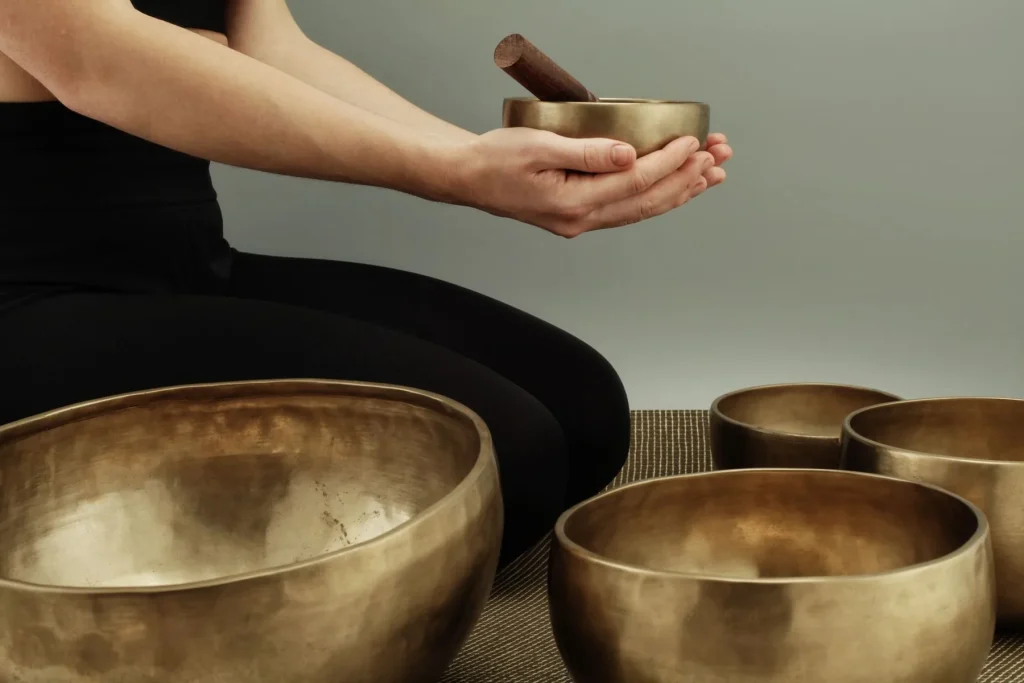
Discover the origins and workings of this instrument, which has fascinated people since the 20th century. The earliest written records date from the 1970s, while quartz crystal singing bowls appeared in the 1980s.
This guide explains in clear language how each bowl’s unique vibration affects the body and mind. We explore resonance, brainwaves and scientific evidence, including studies conducted in San Diego in 2016.
This in-depth article also describes the traditional craftsmanship that gives each piece its own acoustic signature. To learn more about the benefits and contemporary practices, see our page about the sound bath.
What Is a Tibetan Singing Bowl?
A Tibetan singing bowl is an idiophone: it produces sound through the vibration of its own material. This instrument is often compared to an inverted bell. Its apparent simplicity conceals rich acoustics.
Definition and main types
There are two main types: traditional metal-alloy models and quartz crystal bowls, which appeared in the 1980s.
- Metal alloy: warm sound with multiple harmonics.
- Quartz: pure tone and more stable frequencies.
Playing accessories and mallets
A puja or mallet is used to play the bowl. The mallet’s size and material influence the tone color.
- Soft mallet: emphasizes low frequencies and a rounded tone.
- Hard striker: accentuates the singing bowl’s harmonics and clarity.
Understanding the nature of the bowl is the first step toward exploring its benefits. Each bowl has a sonic identity shaped by its form, thickness and material quality.
Tibetan Singing Bowl Sounds: Why Are They So Soothing?
The sustained vibration of a bowl immediately creates a focal point. Its duration allows the mind to detach from repetitive thoughts and concentrate on listening.
Each bowl acts as a sensory bridge. The instrument produces complex harmonics that naturally encourage a slower mental rhythm.
The resonance of a singing bowl may support emotional regulation. It can help reduce everyday stress and promote physical relaxation.
Listening attentively to this instrument allows the body to return to a more relaxed state. Muscular and nervous tension may ease more readily.
- Long vibrations = an attentional anchor.
- Rich harmonics = a slower mental rhythm.
- Longstanding use = an established role in spiritual practice.
In short, a Tibetan bowl’s ability to bring its frequencies into harmony with the body can turn simple listening into a profound meditative experience.
Origins and Historical Development of the Instrument
The earliest traditions associate this instrument with nomadic Mongolian peoples from around 5,000 years ago. These utilitarian objects were reportedly first used for cooking and everyday life before gradually taking on a ritual role.
The Bön religion is said to have played a key role, turning these vessels into esoteric tools before the arrival of Buddhism. Oral tradition describes ceremonies in which bowls accompany prayers and invocations.
Manufacturing techniques gradually became more refined. Craftspeople learned to work the form and alloy to produce richer resonance, transforming an ordinary bowl into a true meditation instrument.
Theories about nomadic roots
Some historians believe that Western interest in the instrument since the 1970s amplified myths about its properties. Despite the lack of ancient written documentation, the tradition remains vibrant in the Himalayas.
- Possible origins: nomadic Mongolian peoples.
- Transition: utensil → Bön ritual → Buddhist use.
- Techniques refined for meditative use.
For a deeper look at the historical research, read this detailed resource, which complements this article.
The Traditional Crafting Process
Making a bowl requires collective expertise and precise coordination among several craftspeople. Five to seven people may work together on a single piece.
The smiths begin by preparing a disc of alloy heated to a high temperature. This metal blank is struck repeatedly to shape it.
Hand hammering takes several hours. This crucial stage gives the bowl its sonic personality and vibrational structure.
- Preparation of the heated alloy disc.
- Extended hammering by skilled craftspeople.
- Trimming and polishing on a rotating plate to refine the tone.
The composition, traditionally said to contain seven metals, is often kept secret. The craftsperson’s hand shapes the final details. The time devoted to each instrument gives it character and a resonance capable of soothing the listener.
In summary, this article shows that creating a bowl is a collective, slow and highly technical undertaking.
Metal Composition and the Symbolism of Alloys
Each metal in an alloy contributes a tonal color and symbolic resonance. Tradition names seven metals: gold, silver, copper, iron, tin, lead and mercury.
Analyses show that older pieces were predominantly bronze. Nevertheless, the symbolism of the seven classical celestial bodies remains widespread.
Craftspeople perpetuate this ritual interpretation while recognizing that sound quality depends chiefly on hammering. The precision of the shaping process influences timbre more than chemical composition alone.
Each metal alters the harmonics. This diversity creates a rich vibrational palette used in meditation and sound therapy.
To learn more about the claims surrounding seven-metal models, consult this resource about seven-metal Tibetan singing bowls.
| Metal | Effect on sound | Symbolism |
|---|---|---|
| Gold | Warmth and sustain | Sun, vitality |
| Silver | Bright timbre | Moon, introspection |
| Copper | Rich harmonics | Venus, harmony |
| Iron / tin / lead / mercury | Variations in density and texture | Associated planets and chakras |
The Physics of Sound Vibration
The physics of resonance explains why a bowl produces such distinctive acoustic beats.
Beating occurs because a bowl is never perfectly round. Two closely spaced vibrational modes alternate and create the audible pulsing effect.
The note produced depends mainly on the size and thickness of the instrument. Thinner walls generally produce higher frequencies, while thicker walls produce lower ones.
The wall’s vibration generates waves that travel through the air. These vibrations can affect the nervous system and produce an immediate relaxing effect.
“Each bowl has a fundamental note that resonates with the body and encourages relaxation.”
The article also shows how combinations of metals enrich the tone. Controlling the mallet’s initial contact and rotation makes it possible to explore the harmonics. Practitioners can thereby make more effective use of bowls in sound therapy.
- Two notes alternate → distinctive beating.
- Size and thickness → frequency and sustain.
- Control of vibration → a more effective therapeutic experience.
Benefits for Managing Stress and Anxiety
Adding a singing bowl to a routine can help reduce physiological responses to stress. A 2016 San Diego study found significant reductions in tension among 62 participants after a sound-meditation session.
The benefits may be felt both mentally and physically. Regular use of the instrument may support relaxation and help moderate the body’s stress response. Its gentle vibration promotes a lasting sense of ease.
In practice, combining a Tibetan bowl with meditation strengthens attentional grounding. Sound-therapy sessions may help stabilize mood and release muscular tension.
- Measurable reduction in anxiety after a session.
- Support for the body’s stress regulation.
- Potential improvement in sleep and general well-being.
“Regular practice turns simple listening into a practical stress-management tool.”
The Role of Frequencies in Deep Relaxation
A sustained note encourages the mind to adopt a slower rhythm. The bowl’s slow frequencies support a shift toward brainwave patterns associated with calm. This slowing may help reduce stress and establish genuine relaxation.
Resonance travels through the body and can feel like an internal massage. The vibrations help release muscular tension and restore a sense of well-being.
Each person responds differently to frequencies, but many listeners experience the instrument as soothing. Focusing attention on the note creates a calm space in which the body can recover.
For example, a 20-minute session often changes a listener’s emotional state and reduces perceived stress. Mindful breathing while listening reinforces the effect of the waves.
| Effect | Typical duration | Result in the body |
|---|---|---|
| Slow frequencies | 10–30 min | Slower mental rhythm, muscular relaxation |
| Targeted vibrations | 5–20 min | Release of localized tension |
| Sustained note | 20 min | Restful state, greater well-being |
“Time spent with this instrument restores a vibrational balance that supports well-being.”
Chakra Harmonization and Energetic Balance
Energy-balancing practices use specific frequencies to work with each chakra.
There are seven major chakras, each traditionally associated with a musical note. A bowl tuned to that note is used to help restore the original vibrations of the energy center.
The vibrations produced by the instrument act like a tuning fork. They help the body rediscover its natural resonance after a period of stress.
The deep relaxation induced in this way supports work with each chakra and may help release accumulated emotional blockages.
- Traditional harmonization: rebalancing the body’s energy centers.
- Precise focus: different bowls for each note and chakra.
- Tuning-fork effect: whole-body resonance and lasting relaxation.
“Regular practice strengthens the connection between body and mind and promotes lasting well-being.”
During a session, the practitioner combines bowls of different sizes and notes to enhance balance. This method remains a powerful tool for anyone wishing to deepen their understanding of the chakras.
Using Bowls in Meditation and Yoga
Using a bowl during meditation creates a thread of sound that guides each breath and posture.
The sound of this instrument helps stabilize attention. It marks transitions between postures and supports breathing.
Combining a bowl with a mantra reinforces the harmonization of the chakras. Vocal repetition combined with sound intensifies concentration.
At the end of a session, a sound massage with a bowl grounds the effects of the practice in the body. The vibrations encourage deep relaxation and support well-being.
The silence between two strikes is equally important. This sonic space invites introspection and prolongs the state of relaxation.
For a fluid session, synchronize breath, movement and tone. The instrument then becomes a companion that modulates the energy of the group or individual practitioner.
“Sound guides the practice and creates a calm space conducive to well-being.”
| Use | Immediate effect | Suggested duration |
|---|---|---|
| Guided meditation | Mental focus | 5–20 min |
| Yoga flow | Rhythm and synchronization of breath and movement | 10–45 min |
| Sound massage | Grounding the benefits | 5–15 min |
Techniques for Making Your Bowl Sing
Mastering a bowl’s tone requires patience and precise technique. This section presents two simple methods for producing a stable sound rich in harmonics.
The rim-rubbing method
Place the Tibetan bowl on the palm of your nondominant hand.
Do not curl your fingers around it. Let the vibrations travel freely.
- Rub the rim with a mallet using a steady circular motion.
- Maintain constant pressure to stabilize the note.
- Vary the speed to explore the harmonics and enrich the sound massage.
Using water to vary the sound
Pouring a little water into the bowl changes the pitch and creates visible waves.
“A quiet place and a little time are all you need to learn how to make the bowl sing.”
Tips for Choosing a Quality Instrument
To choose a good instrument, begin by listening to its note and feeling its vibration in your hand.
Test the instrument in your hand. Your palm should support its weight without obstructing the vibration. A light bowl (≤ 500 g) produces higher notes. A heavier model (> 500 g) produces lower notes conducive to deep relaxation.
Favor pieces shaped by experienced craftspeople. Their expertise influences the alloy’s composition. A hand-worked bronze bowl generally provides better sustain than an industrially cast model.
Choose your bowl in a quiet place. Listen to several examples to identify the frequency that resonates with your body. This guide recommends paying particular attention to the richness of the harmonics and the note’s stability.
| Criterion | What to check | Impact |
|---|---|---|
| Size / weight | ≤ 500 g / > 500 g | High notes / low notes, relaxation |
| Manufacture | Traditional craftsmanship or industrial casting | Resonance, durability |
| Alloy / composition | Worked bronze | Richness of harmonics |
“A thoughtful choice gives you a durable instrument to accompany your well-being practices.”
Caring for and Preserving Your Singing Bowl
Preserving a bowl requires simple, regular care. Clean the instrument with a soft cloth after every use. Avoid abrasive products that could damage the alloy and metals.
If you used water to vary the sound, rinse the bowl with clean water and dry it immediately. Thorough drying prevents oxidation and protects the bowl’s fundamental note.
Do not leave your instrument in a damp place. A dry, temperate environment preserves its metal structure and the clarity of its vibrations.
- Use a soft cloth to remove dust.
- Rinse with clean water if necessary.
- Dry completely before storage.
Regular care ensures that your bowl remains a reliable tool for meditation and relaxation. Caring for its material and finish also honors the work of the craftspeople who made it.
“A simple daily gesture extends the instrument’s sonic life.”
| Action | Frequency | Effect |
|---|---|---|
| Dusting with a soft cloth | After every session | Preserves the surface and resonance |
| Rinsing with clean water | After use with water | Prevents residue and corrosion |
| Thorough drying | Immediately after rinsing | Prevents oxidation |
| Storage | In a dry, ventilated place | Maintains vibrational clarity |
To discover complementary ways of cleansing and caring for spiritual objects, see our cleansing guide.
Compatibility with Different Spiritual Traditions
The bowl’s vibration fits easily into a wide variety of rituals and meditation practices.
In many traditions, this instrument supports prayer, meditation or purification. It creates a simple, universal focus for attention.
Associated with the Himalayas, the bowl is now used by people of different faiths. Each person adapts it to their practice without compromising its deeper meaning.
Crystal models offer a more neutral alternative. Their lack of a strong religious association appeals to people seeking a secular or interfaith practice.
The resonance of this instrument transcends cultural boundaries and opens a shared path toward serenity. Many people incorporate it into a personal routine as a way to connect with the divine or the cosmos.
“The bowl’s versatility allows everyone to preserve the integrity of their own practice while opening their heart to other traditions.”
For a deeper exploration of the historical and ritual context, consult this reference resource about the use of bowls in different traditions.
Scientific Studies and Personal Experiences
Clinical research and personal accounts suggest that vibrations may have measurable effects on relaxation and stress management.
Clinical evidence: a 2016 San Diego study of 62 participants found a marked reduction in tension after a targeted sound-meditation session. A 2014 study involving 51 people reported reduced perceived tension.
Personal experiences complement these findings. Regular sound-massage practice may help people manage everyday anxiety more effectively.
Making a bowl sing often helps practitioners enter a state of deep meditation. The note focuses attention and steadies breathing.
“Sound waves act on the nervous system and offer a natural way to ease tension.”
- Different types of sessions have been associated with improvements in general well-being.
- Adding mantras and targeted vibrations makes it possible to work with each chakra and the body.
- This comprehensive guide to sound therapy summarizes the evidence and techniques for using a singing instrument in a session.
| Study | Participants | Main result |
|---|---|---|
| San Diego, 2016 | 62 | Significant reduction in tension after the sessions |
| 2014 study | 51 | Reduction in perceived tension |
| Clinical reports | Multiple settings | Improved well-being and sleep |
Conclusion
To summarize, these vibrations can offer tangible benefits by helping reduce stress and establish a state of calm. This simple activity turns listening into an accessible method for supporting well-being.
Studies and personal accounts suggest that regular sound-meditation sessions promote deep, lasting relaxation. The effects may be felt emotionally as well as physically.
Whether you want to make a bowl sing to harmonize your chakras, practice sound therapy or accompany a mantra, consistency is essential. A singing bowl can then become a dependable tool for many people.
This guide is designed to help you understand the underlying mechanisms and choose an instrument that enriches your daily practice.