
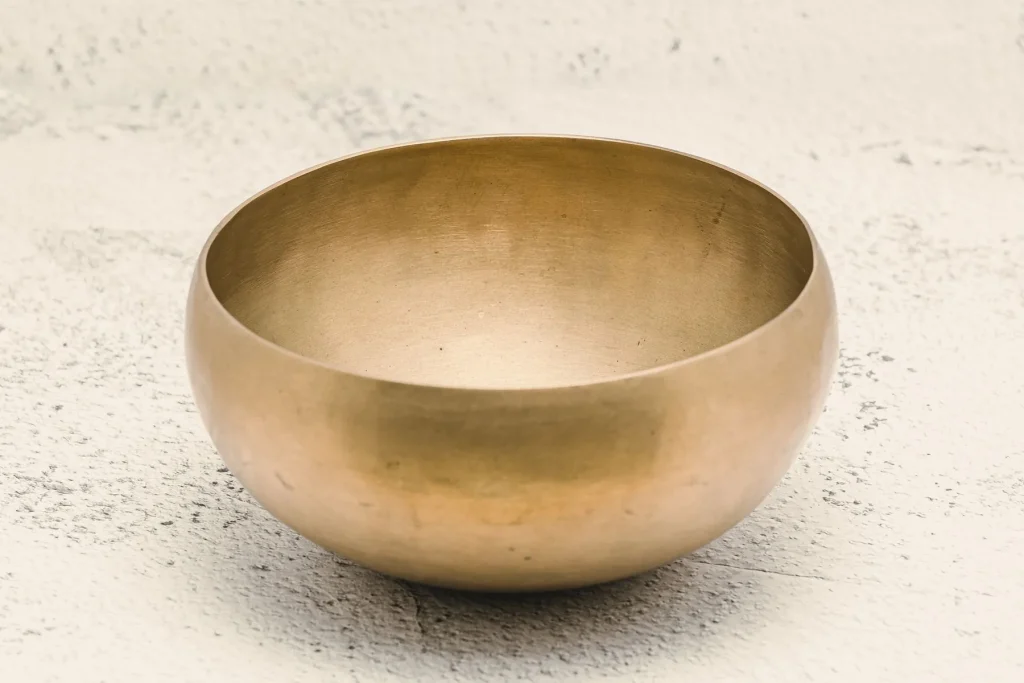
This ancient practice helps reduce everyday stress. It offers a simple way to regain calm and presence.
The sound of a singing bowl creates an anchor for the mind. It supports a short but profound session conducive to well-being.
With regular practice, this routine becomes a steady reference point that is accessible even to beginners. Within a few minutes, concentration develops and tension eases.
Try a guided session, adapt it to your pace, and observe its effects on your body and mind.
Understanding the Tibetan singing bowl and its origins
For millennia, craftspeople have transformed metals into sources of therapeutic sound. Tibetan singing bowls come from regions of Tibet, Nepal, and northern India, where they accompany rituals and ceremonies.
These instruments are traditionally forged from an alloy of seven metals: copper, tin, iron, gold, silver, mercury, and lead. This composition influences their sound quality and the vibrational effects perceived during practice.
Today, the bowl has moved beyond its role as a ritual object. It is often incorporated into yoga classes or sound baths to harmonize the chakras. The vibrations create a harmonic soundscape that helps calm the mind and rebalance the body.
- Craftspeople preserve ancient techniques.
- The metal composition determines the timbre and richness of the sounds.
- The modern bowl is also suitable for therapeutic and educational uses.
Tibetan singing bowl: how beginners can use it for meditation
A short daily ritual of 5 to 10 minutes is enough to establish a sound practice. This time helps foster deep relaxation without placing demands on you.
Ideal posture
Sit on a cushion with your back straight. This posture supports breathing and helps the body relax.
Holding the instrument
Hold your Tibetan singing bowl in the palm of your non-dominant hand. Avoid wrapping your fingers around the base, as this can dampen the vibrations.
- Spend a few minutes each day observing the effects of the sounds.
- Breathe slowly and steadily during the session.
- Gently strike the outer rim at a steady pace without applying excessive pressure.
- Within 5 to 10 minutes, the singing bowl can help calm the mind and support relaxation.
To progress step by step, follow this practical guide, which explains the techniques and ideal pace for beginners.
Choosing equipment suited to your practice
Your choice of equipment directly affects the clarity and duration of the sounds produced. For a first purchase, choose a diameter of 15 to 20 cm: it offers a good balance between low and high tones.
Differences between mallets and sticks
Felt mallets produce a softer sound. They create rounded attacks and warm resonance.
Wooden sticks produce a clear, more pronounced attack. They help you explore the harmonics.
- Diameter of 15 to 20 cm: ideal for beginners and for trying different accessories.
- Resonance ≥ 30 s: a sign of a stable, durable, high-quality alloy.
- Choose a model proportionate to your hand for a comfortable grip.
| Feature | Mallet (felt) | Stick (wood) |
|---|---|---|
| Type of sound | Soft, rounded attack | Clear, defined attack |
| Recommended use | Calm sessions, relaxation | Exploring harmonics |
| Compatibility | Ideal for singing bowls measuring 15 to 20 cm | Suitable for trying different timbres |
Investing in a good instrument provides greater longevity and richer harmonics. For more practical information, follow this practical guide.
Preparing your space for a sound-therapy session
Preparing your practice space helps your body and mind receive the vibrations fully.
Choose a quiet space away from outside noise. Arrange cushions to support your body during a session, which generally lasts 45 to 60 minutes.
Set a clear intention before you begin. A simple intention strengthens the experience and guides your sound practice.
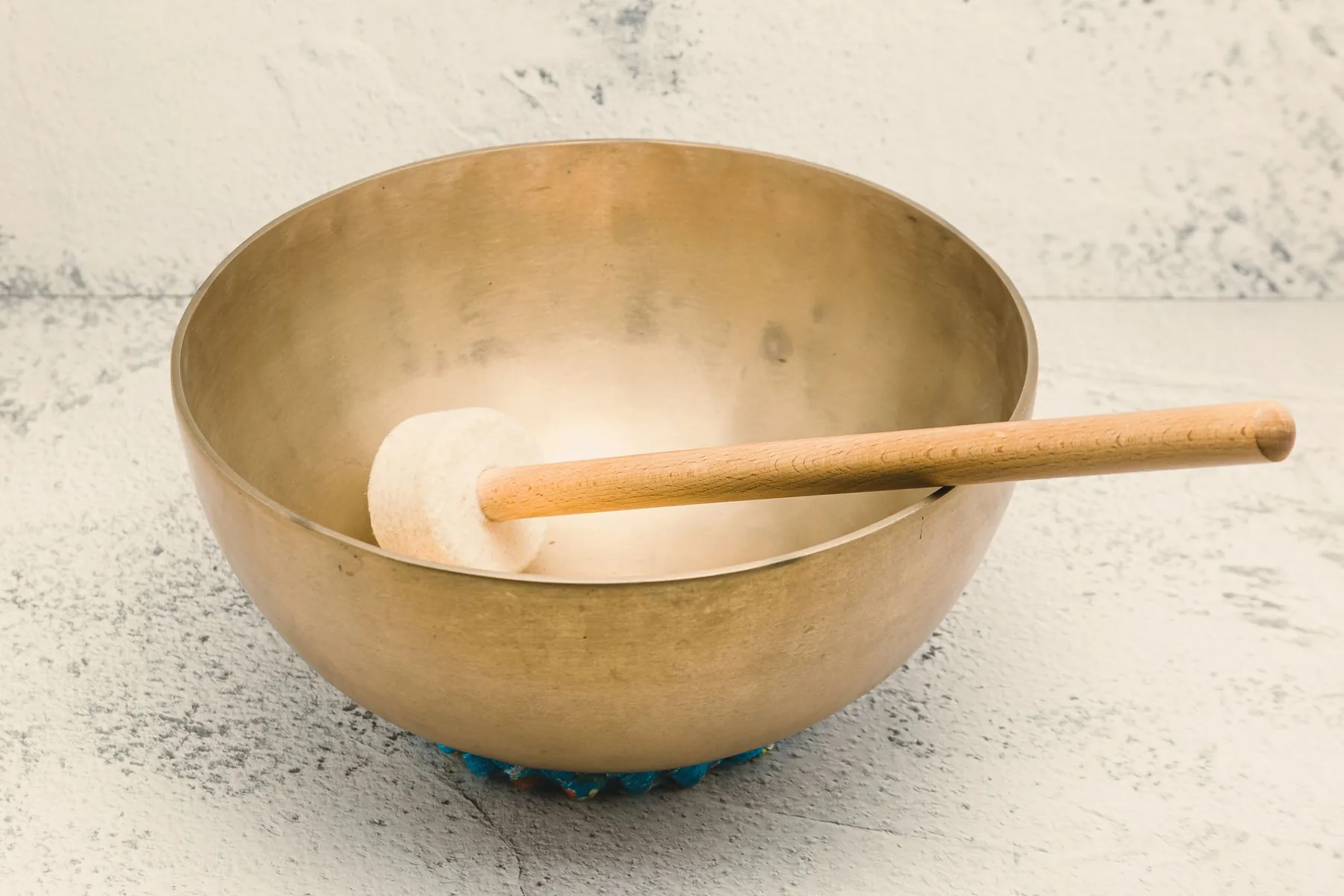
Incorporate sound baths into your weekly routine to encourage a state of deep relaxation. Leave periods of silence between the sound phases.
- Allow time to breathe before and after the session.
- Avoid noisy devices and decide the session’s duration in minutes beforehand.
- Place the singing bowl within reach on a stable support.
| Element | Advice | Purpose |
|---|---|---|
| Cushions | Firm, comfortable seating with lumbar support | Protect the body and extend the session |
| Quiet | Turn off notifications and choose a quiet time | Allow the sounds to circulate freely |
| Intention | A short, precise phrase | Structure the experience and guide the mind |
Mastering the rim-striking technique
Mastering the rim strike allows you to produce clear, lasting vibrations. Aim for the bowl’s outer rim with a relaxed, precise wrist movement.
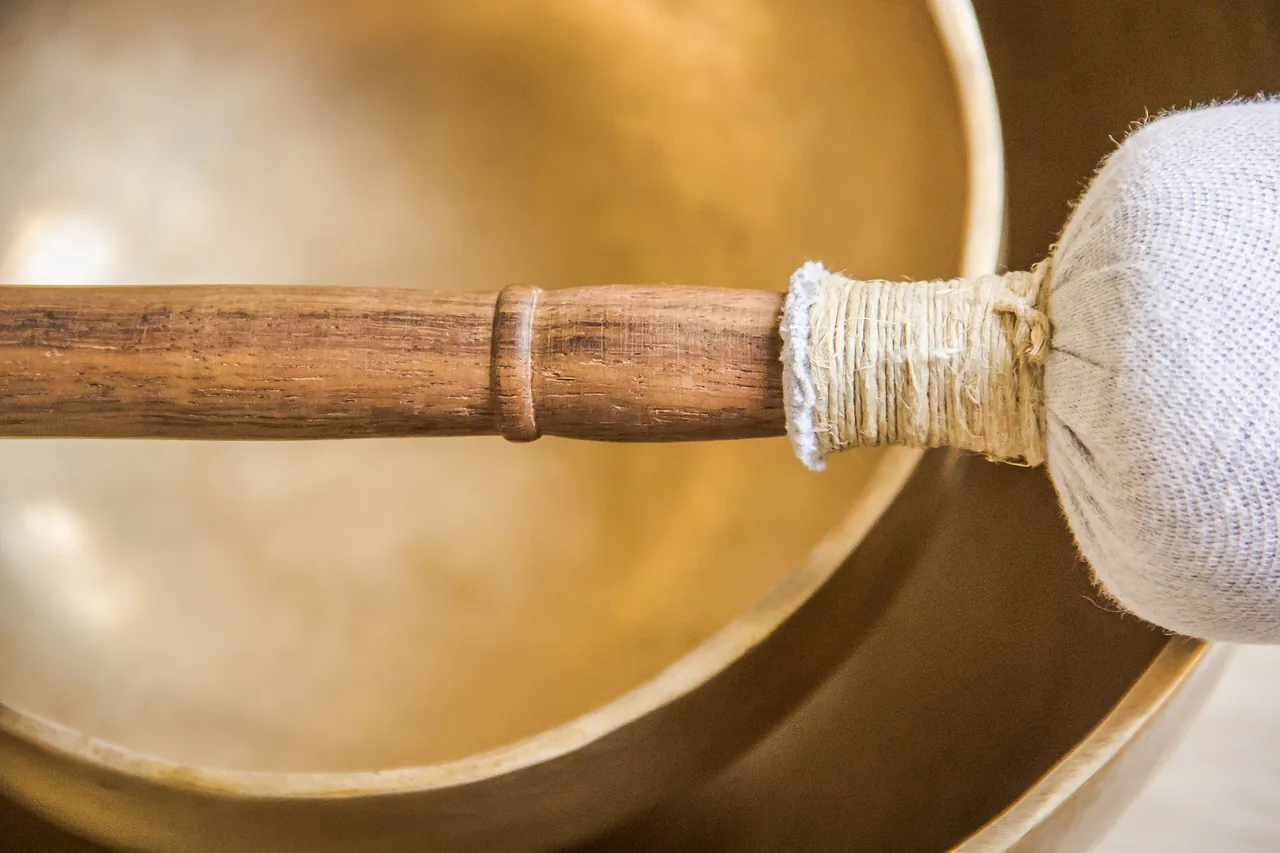
Place the instrument on a cushion or hold it in your open palm so that it can resonate freely. Do not block the base with your fingers: the sounds need to circulate.
Sound quality depends on the pressure applied. The mallet should rebound quickly. Too much force dampens the note; too little weakens the attack.
Respect the silence between strikes. This time allows you to hear the harmonics and observe their effects on the body and mind.
- Adopt an upright posture and set an intention of calm.
- Position your hand and adjust the pace throughout the session.
- Practice the technique regularly to become more precise.
| Action | Purpose | Advice |
|---|---|---|
| Strike the rim | Produce a clear attack | Use a relaxed wrist movement |
| Place the bowl on a cushion or in your palm | Release the resonance | Do not cover the base |
| Control the pressure | Preserve the timbre | Let the mallet rebound |
Learning the circular motion that makes the bowl sing
Learning the circular movement transforms a simple strike into continuous resonance. This technique is designed to produce stable vibrations and a rich timbre without forcing the instrument.
Maintaining constant pressure
Hold the stick between your thumb and index finger, keeping your hand relaxed. Apply even pressure against the rim throughout the circular movement.
A few minutes of daily practice are enough to steady the movement. Consistency improves sound quality and reduces chattering noises.
Direction of rotation
Choose a clockwise or counterclockwise direction according to your intention. What matters is maintaining a consistent pace and stable posture.
Keep your wrist relaxed and your body aligned. Let the resonance spread with the bowl resting on the cushion or in your palm, and respect the silence between passes so that you can hear the harmonics.
- Move slowly and circularly around the rim.
- Maintain constant pressure and a relaxed wrist.
- Practice regularly for a stable sound experience.
| Element | Purpose | Practical advice |
|---|---|---|
| Pressure | Continuous resonance | Apply smooth, even pressure |
| Direction of rotation | Intention and comfort | Choose clockwise or counterclockwise |
| Pace | Sound quality | Practice at a steady pace for a few minutes per session |
The effects of vibrations on the body and mind
The vibrations produced by singing bowls can quickly influence physiological and mental states.
Influence on brain waves
The fundamental frequency of a singing bowl is often between 110 and 660 Hz. These sounds may encourage alpha and theta waves.
Attentive listening may help lower the heart rate. Nervous-system activity slows, and the body enters a state of relaxation.
- Vibrations between 110 and 660 Hz may help induce deep relaxation.
- Regular practice may help reduce stress and improve sleep quality.
- Focusing on the sounds of singing bowls allows the body and mind to experience a calm state conducive to introspection.
- A reduction in nervous-system activity is often observed, which may benefit overall well-being.
| Effect | Brain waves | Typical frequency |
|---|---|---|
| Calm | Alpha | 110–300 Hz |
| Reaching deep silence | Theta | 300–660 Hz |
| Better recovery | Alpha–theta transition | 110–660 Hz |
Incorporating singing bowls into a daily routine
Adopting a regular sound ritual turns an isolated practice into genuine everyday support.
Set aside ten minutes each morning: a short session encourages relaxation and prepares the body for the day. This brief moment is enough to set your intention and clear your mind.
Combine a few yoga poses with time spent practicing with the singing bowl to harmonize the chakras. This combination steadies the breath and strengthens your sense of presence.
Use these instruments daily to maintain lasting well-being. A short practice before bedtime can also release tension and improve sleep.
- Morning: 10 minutes to establish your intention.
- Midday: a quick sound break for breathing.
- Evening: a gentle session before sleep.
Consistency transforms this action into a ritual. To deepen your practice and consult technical guidance, follow this guided session.
Harmonizing the chakras through sound resonance
Harmonious sounds attune the body’s energy to precise frequencies that encourage balance.
Harmonizing the chakras with Tibetan singing bowls may help rebalance the energy centers. Each instrument produces a note associated with a chakra and may help target a specific area.
Sound baths using several instruments offer deep relaxation. They create an immersive experience that soothes the mind and stabilizes your inner state.
The quality of the vibrations is essential: a clear, stable timbre strengthens your intention. With regular practice, you can feel how these sounds influence your well-being.
- Short practice: a focused session may help restore energy.
- Intention: define a precise goal before the session.
- Space: create a quiet place conducive to sound baths.
Solving common difficulties during practice
Simple problems can sometimes disrupt a session. Before blaming the instrument, check your grip, posture, and movement. A small adjustment is often enough to restore a beautiful resonance and reduce the stress of learning.
Why the bowl does not sing
If your bowl does not sing, check the pressure on the rim and make sure your hand is open with the palm unobstructed. Remove rings and bracelets.
Place the instrument on a cushion or in your palm and adjust the pace. A few minutes of experimentation are enough to find the right technique. A lower-quality instrument can make practice more difficult, but how you hold it is often the key.
Avoiding unwanted noises
Chattering and buzzing come from irregular movement or excessive pressure. Use a slow, circular movement. Respect the silence between strikes so that you can hear the harmonics.
To go further, consult this user guide, which can help you correct your movements and improve the session.
- Remove your jewelry and keep your palm unobstructed.
- Work on your pace for a few minutes each day.
- Mastering striking and rubbing techniques may support your well-being and stabilize your inner state.
Precautions and safety advice for a peaceful experience
A few simple measures protect your body and improve the experience. Avoid using Tibetan singing bowls if you are pregnant or have a pacemaker. This precaution takes priority over curiosity.
Protect your hearing. The vibrations can induce intense relaxation. Reduce the volume and limit the duration to a few minutes if your hearing is sensitive.
Always place the bowl on a cushion or hold it in the palm of your hand to protect the instrument. Adjust the pressure: too much force dampens the sound, while too little reduces the resonance.
After the session, rest for a few minutes to allow the body to readjust to the vibrational effects. This encourages a gentle transition and protects your well-being.
- If you feel dizzy or uncomfortable, stop practicing.
- Consult a healthcare professional with any questions about your health.
- Maintain a regular but moderate practice schedule to establish the habit without fatigue.
Conclusion
Regular practice makes the instrument more familiar and transforms your routine into a genuine moment of well-being. By devoting a few minutes to it each day, you may reduce stress and stabilize your inner state.
A few minutes are enough to feel the effects of the sounds on the mind. The quality of the experience depends mainly on consistency and the gradual refinement of your technique.
Vary your intention: harmonizing the chakras, creating a peaceful space, or simply relaxing. To deepen your practice and find useful guidance, consult this guide to sound baths: methods and guidance.
In short: the instrument becomes an ally in maintaining balance, whatever the pace of your life. Keep exploring, adjust your practice time, and savor the experience.