
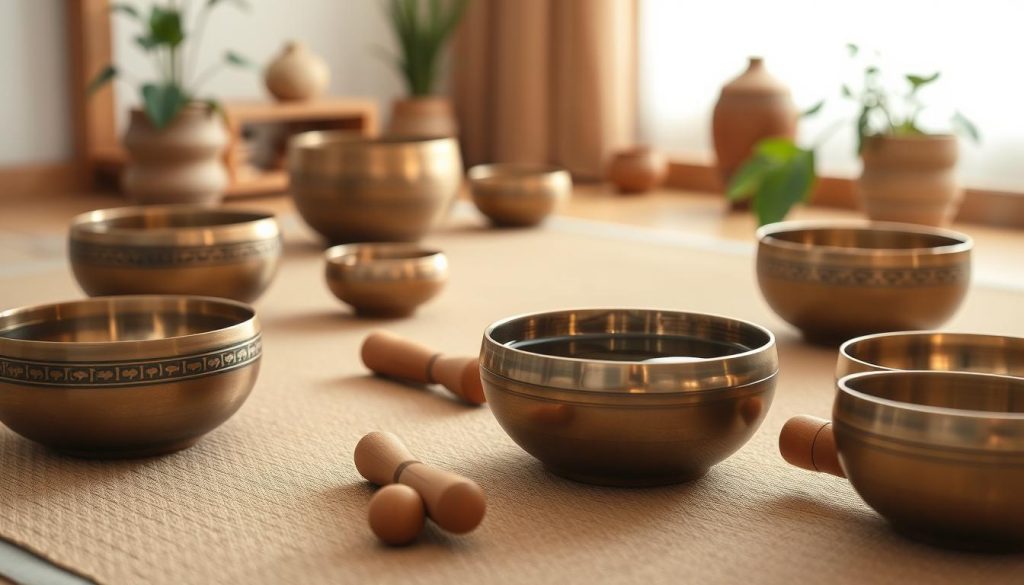
Beginning a sound journey can transform a simple meditation practice into a deeply relaxing session.
Drawing on more than ten years of experience, I explain here how an instrument affects the body and mind. Its size, diameter, and shape alter the frequency and energy each time it is played.
To choose your first bowl wisely, consider how you will use it each day and what you personally need. Singing bowls offer a variety of tones: some produce deep vibrations, while others create higher notes.
Taking the time to compare materials, weight, and tone will help you find an instrument that encourages regular practice.
To explore the subject further and discover suitable models, consult this tested and reviewed selection: singing bowl selection guide. This considered choice will help you get more from every session.
Which Tibetan singing bowl should a beginner choose? The basics
Understanding an instrument’s origins and manufacturing process helps you recognize the resonance of a genuine handcrafted bowl.
Singing bowls come from a Himalayan tradition. Traditional pieces are often hand-hammered by artisans. The metal alloy and hammering process create a unique sound signature.
Distinguishing a handcrafted model from an industrial one is essential. Mass-produced versions often lack harmonic richness. A clear sound signature helps the body enter a state of meditation and calm.
Depending on your budget and sensitivity to vibrations, you can choose a suitable type. For a tested and reviewed selection, consult this Tibetan singing bowl selection guide.
- Handcrafted: rich resonance, hand-hammered.
- Industrial: low price, less complex sound.
- Types: several sizes and timbres for different uses.
| Type | Method | Advantage | Ideal if… |
|---|---|---|---|
| Hand-hammered | Handcrafted from a metal alloy | Harmonically rich resonance | You are looking for deep vibrations |
| Industrial | Mass-produced | Affordable price | Your budget is limited or you want a decorative object |
| Quartz / crystal | Molded or cut | Pure sound with long sustain | You practice targeted sound therapy |
Comparing metal and crystal bowls
Metal and quartz produce waves that affect the body differently. Your choice influences both the tone color and the length of the resonance.
Hand-hammered bowls
A traditional singing bowl is made from an alloy of seven metals: gold, copper, silver, mercury, lead, tin, and iron. Hand-hammered instruments offer rich vibrations and deep notes.
Advantages of quartz crystal
Quartz bowls appeared in the 1980s. They produce higher tones with longer sustain. Crystal is prized for cleansing and energy work.
- Metal: warm timbre and a unique shape that influences the fundamental note.
- Quartz: pure sound, ideal for targeted meditation practices.
- Both types can be used according to each person’s intended use and sensitivity.
| Material | Characteristic | Benefit |
|---|---|---|
| Metal (alloy) | Hand-hammered, 7 metals | Deep vibrations, harmonic richness |
| Quartz | Modern technology, developed in the 1980s | Pure sound, useful for cleansing |
| Use | Meditation / therapy | The body responds differently depending on the material |
The decisive influence of size and weight
An instrument’s dimensions and mass determine its frequency and how its sound waves affect the body.
Understanding these mechanics helps you match the instrument to your goal: relaxation, meditation, or therapy.
Why diameter changes the vibration
The diameter generally ranges from 11 cm to 55 cm. A large model produces low notes, while a small model offers high harmonics.
Pay attention to weight: mass increases rapidly with diameter. Holding a very large instrument becomes difficult and limits how long it can be used.
- Large size = intense vibrations and deep relaxation.
- Small size = high tones, low weight, and easy transport.
- The shape of the wall changes how energy spreads each time the bowl is used.
| Diameter | Characteristic | Ideal if… |
|---|---|---|
| 11–20 cm | High timbres, lightweight | You plan short sessions or need to travel |
| 21–35 cm | Tonal balance, easy handling | You meditate every day |
| 36–55 cm | Deep bass, heavy weight | You want intensely relaxing sessions |
Understanding the relationship between notes and chakras
Matching a note to a chakra turns an instrument into a therapeutic tool.
The 7 notes follow the sequence of the major chakras, from C (root) to B (crown). Each Tibetan singing bowl is tuned to a specific note.
This fundamental note is often determined by the handcrafting process and metal alloy. Seven-metal alloy bowls can be used to balance energy during sessions.
Low notes promote grounding. High notes support spiritual elevation. Each bowl can therefore be chosen according to the energy center you want to work on.
- Each singing bowl corresponds to a specific chakra.
- Tibetan alloy singing bowls offer a range of frequencies.
- When used with intention, bowls can provide precise sound therapy.
| Chakra | Note | Effect |
|---|---|---|
| Root | C | Grounding, stability |
| Sacral | D | Creativity, vitality |
| Solar plexus | E | Confidence, emotional processing |
| Heart | F | Love, openness |
| Throat | G | Expression, communication |
| Third eye | A | Intuition, perception |
| Crown | B | Spiritual connection |
To learn more about choosing by note and intended use, consult our selection guide.
Choosing a sound frequency for an optimal practice
Your chosen frequency profoundly changes how the sounds shape attention and breathing. The modern standard is A at 440 Hz, but many practitioners prefer A at 432 Hz. The latter is often perceived as being more in harmony with nature and the body.
The notes directly influence the chakras and the state of relaxation. A frequency such as 528 Hz is often used to target a particular energy center and support a meditation session.
Quartz bowls provide greater precision. If you want accurate tuning and a stable frequency, quartz crystal bowls are recommended. They allow you to harmonize notes precisely and refine your sound work.
- 440 Hz = modern standard, compatible with contemporary music.
- 432 Hz = natural resonance, sense of calm.
- Specific frequencies (e.g., 528 Hz) = targeting chakras.
| Frequency | Use | Advantage |
|---|---|---|
| 440 Hz | Music in general | Compatibility |
| 432 Hz | Meditation | Sense of harmony |
| 528 Hz | Therapy | Targeted work on a note or chakra |
How budget affects instrument quality
Your budget directly affects an instrument’s tonal richness and lifespan.
The price varies according to weight, alloy, diameter, and the complexity of the hand-hammering process. A small 11 cm instrument costs around €60, while a large model may exceed €2,200.
Seven-metal alloy models, often containing tin, gold, and silver, require more time and material. They offer richer harmonics than most five-metal alloy versions.
- Weight & size: influence the note and its sustain.
- Alloy: sound quality and material value.
- Hand-hammering: durability and unique character.
| Factor | Influence | Price range |
|---|---|---|
| Diameter / size | Fundamental note, energy | €60–€2,200 |
| Alloy (5 or 7 metals) | Harmonic richness | Mid-range to high price |
| Craftsmanship (hand-hammered bowls) | Unique sound signature | High price (e.g., Full Moon) |
Practical advice: regard every instrument as unique. If you want outstanding quality, handcrafted models such as Santa Ratna Shakya’s Full Moon bowl are a genuine investment.
To compare options and budgets, consult our singing bowl selection guide.
Tips for selecting a bowl that meets your needs
A well-chosen instrument precisely matches the purpose and rhythm of your practice. First, define your goal: meditation, cleansing, or a gift. This clarity will guide your choice of size, note, and harmonic character.
Use in meditation
For meditation, favor a smooth, continuous tone without unwanted fluctuations. A singing bowl that produces a stable note makes grounding and relaxation easier.
Cleansing stones
Cleansing stones requires an instrument at least 15 cm in diameter. A model with great tonal richness helps dispel negative energy and revitalize crystals.
Giving a bowl as a gift
For a gift, a metal model measuring 12 to 17 cm remains versatile and widely appreciated. Pay attention to its shape and the feeling it creates: each bowl should resonate with its recipient.
- Tip: test the note and its sustain before buying.
- Wide selection: Instruments du Monde offers more than 200 models, allowing you to find precisely the type of bowl that suits you.
Need help? Consult our singing bowl selection to refine your choice.
Conclusion
A balance of material, size, and note determines the ideal sound instrument. Traditional metal offers warm harmonics, while crystal provides great precision. Weight and diameter influence frequency and suitability for meditation or therapy.
Budget remains a useful indicator: a carefully worked alloy and hand-hammering often ensure better sustain. Ultimately, however, your own response will confirm your connection with the instrument.
To explore your options further, consult our practical guide and let attentive listening guide you. A good instrument soon becomes a companion for well-being.