
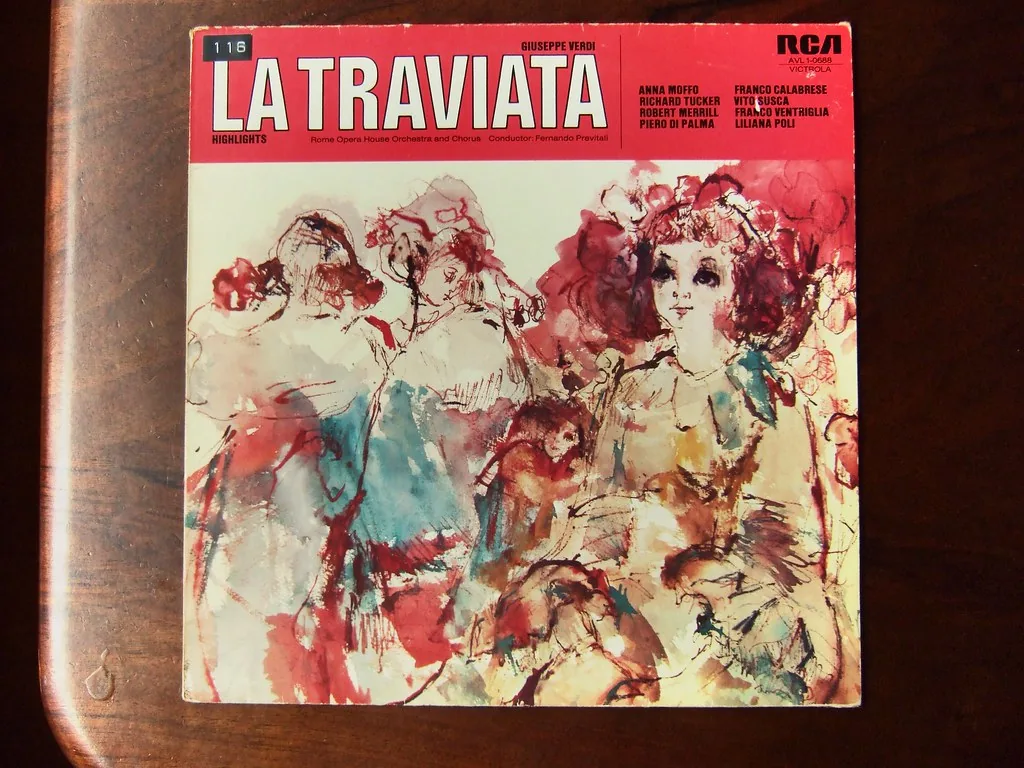
The 1964 recording of Carmen conducted by Georges Prêtre remains a landmark in the history of opera. Although this version was never given a complete stage production, it left an indelible mark thanks to the diva’s unique voice.
By the 1950s, Callas was already famous for her ability to embody complex characters. Her approach to Carmen, shaped by a vocal decline that paradoxically suited the role, fascinated critics and audiences alike. Though controversial, this interpretation is now regarded as a benchmark.
Contemporary opinions were divided, but posterity has confirmed the importance of this interpretation. Callas gave Carmen a rare emotional depth, making this recording an invaluable legacy.
Introduction to Maria Callas
Born in New York in 1923, this artist made her mark on opera history. Of Greek descent, she became a timeless legend. Her New York childhood and musical training in Greece shaped an extraordinary soprano.
After becoming a global icon, she redefined operatic art by incorporating acting into her performances. Leonard Bernstein called her “the Bible of opera,” a title that sums up her influence on the musical world. Her artistic life reflects her passion and dedication.
A legendary diva
Her transformation from an “ugly duckling” into a diva is a source of inspiration. She captivated audiences with her unique voice and charisma. Yves Saint Laurent described her as
“a great solitary eagle”
, a metaphor that reflects her mysterious and powerful aura.
Carmen’s importance in her career
The role of Carmen occupied a central place in her career. It allowed the soprano to explore new dramatic dimensions. Compared with her other signature interpretations, such as Norma and La Traviata, Carmen marked a turning point in the way she redefined operatic drama.
Maria Callas’s early years
In December 1923, a future opera legend was born in New York. Born into a Greek family, she grew up amid family tensions and early pressure from her mother. These formative years shaped her personality and her approach to music.
Her vocal talent was discovered during school concerts in Washington Heights. These performances marked the beginning of her transition toward a more demanding operatic repertoire. She later studied at the Greek National Conservatoire under Maria Trivella. There she developed a passion for French music, particularly Bizet’s work.
Childhood and musical training
Her training was influenced by her Greek education and love of classical music. She quickly left popular music behind to devote herself to opera, a choice that defined her career. She signed her first major contract in Verona in 1947, where she performed La Gioconda.
First steps in opera
Giovanni Battista Meneghini played a decisive role in launching her career. He was not only her mentor but also her first husband. In 1950, her performance in Aida at La Scala in Milan received glowing reviews, confirming her status as a rising star.
| Event | Year | Significance |
|---|---|---|
| Born in New York | 1923 | Beginning of her story |
| Studies at the Greek National Conservatoire | 1937 | Musical training |
| First contract in Verona | 1947 | Beginning of her career |
| Positive reviews at La Scala | 1950 | International recognition |
The rise of a star
In the 1950s, a rising star established herself on the Italian stages. This period marked a decisive turning point in opera history, with performances that redefined artistic standards.
Conquering the Italian stages
Her triumph in I vespri siciliani at La Scala in Milan in 1951 cemented her reputation. Acclaimed by critics, this performance demonstrated her vocal versatility and dramatic talent. She brilliantly performed a wide range of roles, from Wagner to Bellini, strengthening her status as an operatic phenomenon.
Her collaboration with Tullio Serafin played a key role in the rediscovery of bel canto. This artistic partnership opened up new musical and theatrical dimensions, making her an essential figure in operatic theater.
The role of Giovanni Battista Meneghini
Giovanni Battista Meneghini, her husband and manager, was a pillar of her career. From 1949 to 1959, he managed her engagements rigorously, arranging extensive tours in Venice, Rome, Milan, and Florence. His unwavering support and strategic vision helped shape her public image and turn her into a global icon.
Their marital and professional relationship, though complex, facilitated her meteoric rise. Meneghini skillfully orchestrated a career that made opera history and established her as a timeless legend.
| Event | Year | Impact |
|---|---|---|
| Triumph in I vespri siciliani | 1951 | Acclaim at La Scala |
| Collaboration with Tullio Serafin | 1950s | Rediscovery of bel canto |
| Management by Meneghini | 1949-1959 | Career strategy |
Maria Callas and bel canto
This diva’s artistic journey was marked by a unique fusion of French and Italian operatic traditions. This synthesis redefined the approach to singing and left a lasting mark on the history of opera.
The influence of French music
Her recordings with Georges Prêtre between 1961 and 1964 demonstrate her mastery of the French repertoire. She adapted coloratura passages to her dramatic vocal range, creating an unprecedented expressiveness. As one critic observed:
“She transcended the boundaries of the French style and turned it into a universal art form.”
This approach revolutionized the interpretation of operatic heroines, offering an example of how virtuosity and emotion could be combined.
Discovering Italian bel canto
Trained by Elvira de Hidalgo, she mastered the techniques of bel canto, a style characterized by fluidity and legato. This training enabled the diva to disguise her vocal limitations while strengthening her dramatic impact. Her legacy lives on in modern productions of Norma and Lucia, where her technique continues to inspire.
| Aspect | Influence |
|---|---|
| French recordings | Unique expressiveness |
| Italian training | Mastery of bel canto |
| Adaptation of coloratura passages | Technical innovation |
Maria Callas’s defining roles
The roles she embodied redefined operatic art. Each of her performances displayed exceptional psychological depth and stage presence. Among her most memorable appearances, Norma and La Traviata stand out as milestones in her career.
Norma: a turning point in her career
The role of Norma marked a decisive turning point. In 1958, during a performance in Rome, a scandal erupted when she stopped singing. Though controversial, the incident underscored her total commitment to her roles.
She offered a deeply psychological reading of this tragic character. Her performance redefined the way operatic heroines were perceived. The tension between vocal demands and physical transformation also played a key role in her interpretation.
La Traviata: a memorable interpretation
The 1955 production of La Traviata at La Scala remains legendary. Under Luchino Visconti’s direction, she brought Violetta to life with unmatched dramatic intensity. This artistic collaboration marked a key moment in the history of operatic theater.
She lost 30 kg for the role, a physical transformation that strengthened her embodiment of the character. Her innovative approach to the dramatic construction of arias left a lasting mark on modern opera.
- Psychological analysis of tragic characters.
- Innovation in the dramatic construction of arias.
- Artistic collaboration with Luchino Visconti.
- Lasting impact on perceptions of operatic heroines.
Maria Callas: Her Interpretation of Carmen Explained
In 1964, an exceptional recording made opera history. Conducted by Georges Prêtre, this version of Carmen captivated listeners with its innovative approach and emotional depth.
The legendary 1964 recording
This recording, made aboard Onassis’s yacht, rejected traditional melodrama. The diva chose a realistic characterization, using her voice strategically to express disillusionment. As one critic noted:
“She transcended the limits of the role, offering a Carmen who was both fascinating and tragic.”
The paradox of a worn voice serving Carmen’s character perfectly was one of the most remarkable aspects of this interpretation. This approach paved the way for rich comparisons with more traditional performances.
The nuances of her performance
The diva chose an interpretation that oscillated between contempt and fascination for the role. The recitatives played a key part in the dramatic construction, adding profound psychological depth. Despite the absence of a complete staged version, this recording has enjoyed undeniable longevity.
The 1960s thus produced an interpretation that continues to inspire opera lovers. Her collaboration with Georges Prêtre created a timeless work and marked a turning point in the history of operatic art.
Maria Callas’s physical transformation
The transformation of this operatic icon redefined audience expectations. In the 1950s, her physical transformation became a source of fascination, marking a turning point in her career and in the evolution of her public image.
Her weight loss and its impact
Her drastic diet, said to have been inspired by the film My Fair Lady (1964), led to dramatic weight loss. This transformation had vocal consequences, but it also redefined standards of beauty in opera. Critics observed that her appearance enhanced her dramatic credibility on stage.
Her collaboration with Luchino Visconti played a key role in this development. Together, they redefined her stage movements, creating harmony between her appearance and her performances. This transformation attracted considerable media attention and made her a fashion icon.
The influence of Audrey Hepburn
The elegance of Audrey Hepburn strongly influenced her style. Comparing photographs of the two reveals striking similarities in their appearance and demeanor. This inspiration enabled the diva to reinvent herself by combining sophistication with simplicity.
The complex relationship between appearance and dramatic credibility sparked debate. Some criticized the aesthetic demands of the operatic world, while others praised her ability to transform her image to embody her roles more fully.
| Aspect | Impact |
|---|---|
| Weight loss | Redefinition of beauty standards |
| Influence of Audrey Hepburn | Reinvention of her public image |
| Collaboration with Visconti | Harmonization of her stage movements |
Maria Callas and cinema
Cinema added a new dimension to this legend’s career. In the 1960s, she explored a different form of expression, making a bold transition from the operatic stage to the big screen.
Her experience with Pier Paolo Pasolini
Her collaboration with Pier Paolo Pasolini was a key moment. Filming Medea in Turkey and Syria in 1969 was grueling. Pasolini used her voice as an independent dramatic instrument, creating a symbiosis between sound and image.
This experience highlighted the challenges of moving between two artistic worlds. As one critic noted:
“Her screen presence is as powerful as her stage presence, but cinematic language demands a different approach.”
The film “Medea”
The film Medea revealed a new facet of her talent. Although it received mixed reviews at the time, the film is now regarded as a cult classic. It marked a turning point in the way she was perceived as a multidisciplinary artist.
- A difficult transition from the operatic stage to the big screen.
- Analysis of Pasolini’s direction of actors.
- Comparison between the operatic and cinematic versions of Medea.
- Impact on cinematic adaptations of opera.
This cinematic venture left a lasting legacy, influencing later screen adaptations of operatic works.
Maria Callas’s romantic relationships
Her love life captured the public imagination as much as her artistic career. The diva’s choices were often scrutinized and affected both her art and her well-being. Two men played especially significant roles in her life: Giovanni Battista Meneghini and Aristotle Onassis.
Aristotle Onassis: love and tragedy
Meeting Aristotle Onassis in 1957 transformed her life. Their relationship, which began during a cruise, quickly became passionate. Yet this love had a destructive impact on her career and vocal health.
Previously unpublished letters reveal her distress after their breakup. She often expressed her loneliness and despair, exposing a vulnerability rarely seen in public. As one biographer noted:
“Her broken heart echoed through her performances, adding unmatched emotional depth.”
The end of her relationship with Giovanni Battista Meneghini
Before Onassis, Meneghini had been a pillar of her life. Their relationship, both marital and professional, facilitated her meteoric rise. Onassis’s arrival, however, marked the end of that partnership.
The separation from Meneghini was painful, but it also gave her new artistic freedom. This period was marked by an intense expression of suffering that could be heard in her performances.
| Aspect | Meneghini | Onassis |
|---|---|---|
| Role | Manager and husband | Lover and influential figure |
| Impact | Stability and career | Passion and chaos |
| Legacy | Operatic legend | Romantic myth |
Maria Callas’s final years
The 1970s marked a turning point in the life of this operatic legend. As her career reached its peak, personal and artistic difficulties began to eclipse her glory. The decline of her voice, attributed to dermatomyositis reportedly affecting her vocal cords, marked the end of an era.
The decline of her voice
Her final recital at the Champs-Élysées in 1973 is often regarded as her artistic testament. Despite her physical limitations, she captivated the audience with her dramatic intensity. As one critic observed:
“Although weakened, her voice conveyed unmatched emotion.”
This performance highlighted the paradox of an artist confronting the fragility of her instrument.
Loneliness in Paris
Withdrawn into her apartment on Avenue Georges-Mandel, she spent her final years in profound solitude. Paris, both a refuge and a gilded prison, witnessed her struggles with depression and dependence on medication. Accounts from this period reveal a woman searching for inner peace.
In September 1977, a chapter in opera history ended with her death. Her passing in the City of Light added a symbolic dimension to her legacy, recalling the fragility of artistic icons.
Maria Callas’s legacy
Her influence on operatic art remains undeniable, even decades after her death. She redefined the demands of opera, leaving a legacy that continues to inspire artists and enthusiasts around the world.
Her influence on modern opera
She revolutionized acting in operatic productions. Her dramatic approach and total commitment to her roles marked a turning point in modern opera. Artists such as Anna Netrebko and Joyce DiDonato still draw inspiration from her technique and passion.
Her recordings are used in conservatories as models of excellence. She also influenced feminist interpretations of female roles, bringing unprecedented psychological depth to her characters.
Posthumous tributes
In 1983, the Maria Callas International Grand Prix was established to honor her memory. The competition attracts talent from around the world, perpetuating her legacy in operatic circles.
The Musée de la Musique in Paris houses a permanent exhibition devoted to her career. The exhibition traces her journey and highlights her influence on operatic art.
In 2023, events commemorating the centenary of her birth reaffirmed her status as a timeless icon. These tributes reflect the love and respect that the opera world still holds for her today.
The mysteries surrounding her death
The circumstances of her death remain shrouded in mystery to this day. In September 1977, the opera world lost an icon under circumstances that prompted widespread speculation.
The theories and controversies
Initial medical reports cited a heart attack as the cause of death. However, claims of suicide soon emerged, fueling rumors. The media played a key role in spreading these theories and creating an atmosphere of suspicion.
In 2010, Italian physicians revised the diagnosis, resolving some inconsistencies in the original reports. This reassessment partly clarified the true causes of her death, but it did not dispel every doubt.
The final diagnosis
The scattering of her ashes in the Aegean Sea added a symbolic dimension to her story. Though poetic, the act also helped sustain the mysteries surrounding her death. As one expert observed:
“The circumstances of her death reflect the complexity of her life and legacy.”
Comparisons with the mysterious deaths of other divas have also fueled conspiracy theories, reinforcing her status as a tragic legend.
Maria Callas: a timeless icon
Her influence extends far beyond opera: she has become a touchstone in popular culture. Her voice, style, and aura continue to inspire generations well beyond the operatic world. Having become an icon, she transcended the boundaries of her art and secured a place in the collective imagination.
Her impact on popular culture
Her voice has been used in celebrated films such as Philadelphia (1993), adding emotional depth to poignant scenes. Fashion designers such as Dolce & Gabbana have drawn inspiration from her style for their collections, particularly in 2022. These tributes attest to her status as a timeless diva.
Biographical film projects involving stars such as Angelina Jolie and Lady Gaga show that her story continues to fascinate. These cinematic adaptations explore her life by blending tragedy and triumph, further strengthening her legacy in popular culture.
Callas in the collective imagination
She remains a figure who transcends generations, inspiring reinterpretations in pop and electronic music. The popularity of Callas impersonators in operatic shows demonstrates how deeply her image is embedded in the collective imagination.
Merchandise bearing her likeness, including objects and clothing, perpetuates her legacy. Her life, often compared to a modern Greek tragedy, continues to captivate the public. As one critic noted:
“She became a universal symbol, transcending eras and genres.”
Her artistic and cultural influence remains undeniable, making her an icon whose legacy endures.
Conclusion
This diva’s artistic legacy continues to resonate throughout the opera world. Her revolutionary contributions redefined the demands of operatic art, combining perfectionism with vulnerability. Her unique approach to the interpretation of Carmen remains a benchmark, captivating listeners with its emotional depth.
Despite her vocal difficulties, she transformed her limitations into strengths and created unforgettable performances. Her historic recordings, including the one from 1964, invite continual rediscovery and reveal nuances that remain relevant today.
Future research into her legacy promises to shed further light on her influence on modern opera. Her voice, though weakened at the end of her career, still conveys unmatched emotion and testifies to her timeless genius.