
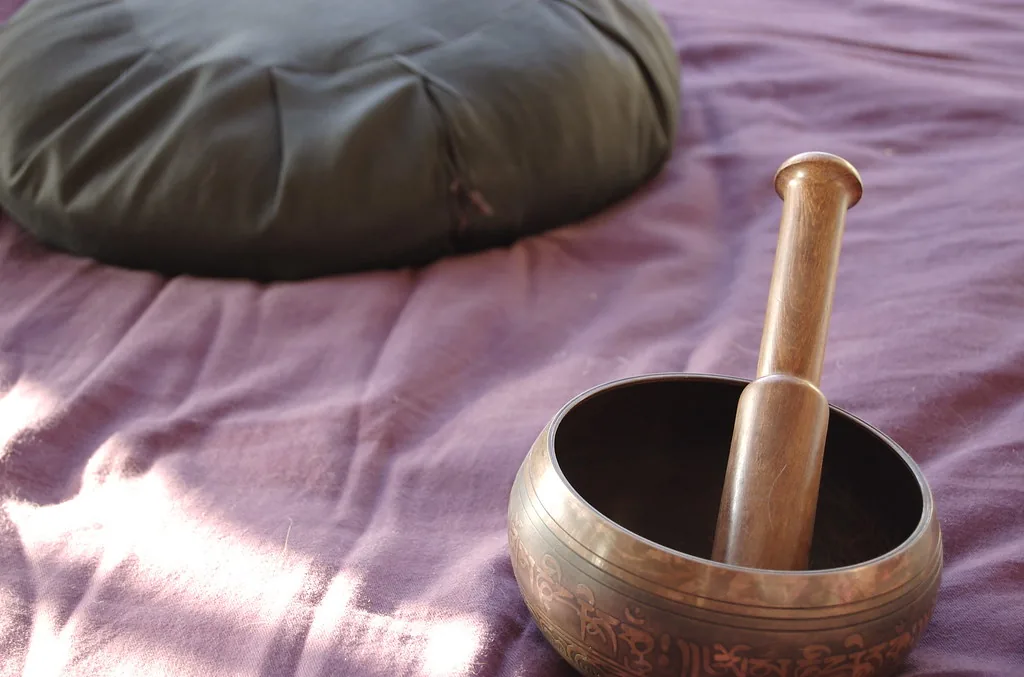
With more than 10 years of experience, I explore here why your bowl’s support changes everything. A good cushion stabilizes the bowl and improves its resonance. It influences sound quality and how long notes last.
Every instrument, whether a gong or a Tibetan singing bowl, deserves care. Placing it on a table or a dedicated support changes its sound and affects concentration. In practice, just a few minutes are enough to feel the difference.
Whether you practice yoga or meditation, this short article offers clear advice. We compare sizes, hand-contact techniques, and different supports. The goal is simple: to enhance relaxation and the acoustic experience.
In 10 minutes of reading, you will understand how every note and vibration can transform your space into a haven of inner peace.
Understanding the Purpose of a Tibetan Singing Bowl Cushion
The stability of the support profoundly affects the quality of the notes produced by an instrument. A suitable base prevents unwanted noise caused by direct contact with a hard surface.
In practice, this allows vibrations to spread without interference. The result is a purer note that lasts longer.
For relaxation and meditation, this detail changes the experience. Within a few minutes, the feeling of relaxation becomes more noticeable.
How you hold the instrument in your hand influences your technique, but a support remains essential for preserving sound quality.
- Stabilizes the instrument and reduces unwanted vibrations.
- Improves note quality for sound massage.
- Harmonizes the space during yoga and meditation.
| Effect | Practical benefit | Duration | Application |
|---|---|---|---|
| Reduced unwanted noise | Better listening | Longer notes | Meditation, relaxation |
| Stability | More precise playing | Long-lasting | Sound massage, yoga |
| Protection | Protects the surface | Variable | Transport and display |
| Optimized vibrations | Purer notes | Longer | Professional practice |
To learn more about choosing a support that suits your practice, read our guide. The right product truly changes how your instruments vibrate in the room.
Tibetan Singing Bowl Cushion: What Is It Really For?
A stable support immediately improves your instrument’s safety and sound quality. It prevents slipping and makes every movement safer during a session.
Instrument stability
The support holds the instrument in place during meditation. This prevents the bowl from rolling or tipping over on the table.
With a reliable base, concentration improves and relaxation comes more quickly. Sound-massage techniques produce a steadier note.
Protection against impacts
Padding limits the risk of cracking if the instrument falls. Protecting your Tibetan singing bowls extends their lifespan, even after years of use.
In practice, the support frees your attention. You can remain focused on the present moment without worrying about a fall or unwanted noise.
| Function | Benefit | Use |
|---|---|---|
| Stability | Better note sustain | Meditation, yoga, massage |
| Protection | Reduces impacts and the risk of cracks | Transport, display, daily practice |
| Comfort | Less attention required for positioning | Long relaxation sessions |
How the Support Affects Acoustic Resonance
A simple change of support transforms how vibrations travel. On a hard surface, bowls produce unwanted noises that impair sound quality.
A suitable base absorbs stray vibrations and lets the resonance unfold. The result is a purer note that lasts longer.
By choosing the right support, you allow your Tibetan singing bowl to release its full power. This enriches the relaxation experience and encourages deeper listening.
- Every instrument reacts differently depending on the surface beneath it.
- Mechanical vibrations travel better through a soft, suitable support.
- The right support ensures that resonance is not stifled by a hard surface.
Over ten years of observation, I have found that resonance quality depends largely on the support’s ability to sustain the instrument’s vibrations.
| Effect | Without a support | With a suitable support |
|---|---|---|
| Notes | Short and accompanied by unwanted noise | Long and pure |
| Vibrations | Stifled | Freely transmitted |
| Experience | Less immersive | Deeper relaxation |
Conclusion: choosing the right support is crucial for optimizing resonance and getting the most from your instrument.
The Different Types of Supports Available
The market offers a wide variety of supports suited to different acoustic and aesthetic needs.
Many different options are available: small cotton cushions, rubber rings, padded mats, and rigid display stands.
A suitable base can optimize the sound of any instrument, whether made of metal or crystal. Your choice affects note purity and vibration duration.
- Rings provide stable support for wider bowls.
- Mats make transport and practice away from home easier.
- Rigid supports are primarily intended for display and protection.
Over 10 years, many models have been tested to improve relaxation and meditation.
“The right support transforms the sound experience.”
| Type | Use | Benefit |
|---|---|---|
| Padded | Daily practice | Absorbs unwanted vibrations |
| Rubber | Crystal instruments | Stability |
| Rigid | Display | Protection |
A Closer Look at Ring-Shaped Cushions
Rings often provide the most precise way to support an instrument without restricting its harmonics.
Acoustic benefits
These rings promote purer vibrations. They isolate the instrument from the contact surface and allow the metal body to resonate freely.
The ideal ring diameter should be about 85% of the instrument’s diameter. This allows the bowl to rest securely without becoming distorted.
In practice, a correctly sized ring can bring out each instrument’s acoustic qualities and encourage relaxation.
- Transmission: vibrations reach the listener without obstruction.
- Stability: the ring prevents slipping and protects the contact surface.
- Space-saving: the ring fits inside the bowl for easier storage and transport.
| Criterion | Effect | Advice |
|---|---|---|
| Size | Preserves the shape | Choose a ring with a diameter equal to 85% of the bowl’s diameter |
| Type | Sound purity | Choose a padded ring |
| Use | Portability | Ideal for traveling practitioners |
Conclusion: this article shows that these supports can be the best option for stabilizing your bowls and improving note quality.
The Particular Features of Traditional Padded Cushions
Traditional padded designs combine beauty and comfort to showcase your instruments. Often decorated with tassels, they serve as display pieces during relaxation sessions.
Any Tibetan singing bowl can rest on this type of support. Its appearance adds warmth to the meditation space.
The thickness of the padding affects the note. Dense padding absorbs more vibration and can slightly shorten its duration.
- Appearance: tassels and colorful fabrics showcase the displayed instrument.
- Stability: the support should be slightly larger than the bowl to prevent tipping.
- Function: these supports are both practical and decorative.
Over ten years, these designs have become essential accessories for anyone seeking to combine style and function.
| Criterion | Effect | Advice |
|---|---|---|
| Size | Stability | Choose a support slightly larger than the bowl |
| Thickness | Affects the note | Choose medium-thickness padding for a good balance |
| Design | Atmosphere | Coordinate the support with your relaxation space |
Using Mats for Better Portability
Roll-up mats offer a practical way to move instruments.
Tibetan singing bowl mats are ideal for practitioners who frequently transport their equipment.
Each instrument rests on a stable base that fits into your bag without taking up too much space.
Often decorated with symbols, these supports protect and enhance the relaxation space.
Over ten years, these mats have become a popular alternative to cushions, especially for travel.
The note remains clear on a compact mat, although its resonance differs from that produced with thick padding.
- Easy to roll up, they save space.
- Their compact dimensions allow them to fit inside a bag.
- Practical for maintaining your meditation routine while traveling.
| Criterion | Portability | Protection | Resonance |
|---|---|---|---|
| Roll-up mat | Excellent — folds away for storage | Good — protects the surface | Clear, but less deep than with a thick cushion |
| Rigid mat | Average — bulky | Very good — stable support | Resonance closer to that produced with a display stand |
| Padded cushion | Low — takes up space | Good — absorbs impacts | Warmer, longer resonance |
Why Choose Rubber Rings for Crystal Bowls?
Rubber rings offer a simple and effective way to preserve the pure sound of quartz instruments. They isolate the flat base and prevent direct contact with a hard surface.
Unlike metal Tibetan singing bowls, each quartz bowl can be sensitive to contact. An unsuitable base stifles the vibration and makes the note less crystalline.
In practice, these O-rings protect crystal placed on a table. They compensate for uneven surfaces and reduce the risk of hairline cracks.
- Protection: they prevent direct friction against a rough surface.
- Resonance: the note remains pure and clear.
- Stability: choosing a ring with a diameter equal to half the bowl’s diameter provides optimal support.
Over ten years, rubber rings have become the standard for high-quality crystal instruments.
| Criterion | Effect | Advice |
|---|---|---|
| Material | Fragile quartz | Soft ring recommended |
| Positioning | Reduced contact | On a table, precisely centered |
| Size | Stability | Ring diameter = 50% of bowl diameter |
The Role of Display Stands in Showcasing Your Instrument
Display stands turn your instruments into eye-catching decorative pieces. Solid-wood stands are designed for display and showcase Tibetan singing bowls in a meditation corner.
However, these supports are not designed for playing. They can be unstable and alter the note. Using a display stand while playing the bowl is therefore not recommended.
Each bowl can rest on a base to encourage visual focus before a session. Over ten years, these items have become popular decorative features.
These supports are decorative objects that add a touch of serenity to your practice space.
- Display: showcases the shape and finish.
- Appearance: creates an atmosphere conducive to meditation.
- Practicality: does not replace a suitable support for playing notes.
| Function | Benefit | Limitation |
|---|---|---|
| Display | Enhanced appearance | Suboptimal resonance |
| Visual focus | Better mental preparation | Instability while playing |
| Decoration | Calming atmosphere | Less protection than a padded support |
Professional Use of a Singing Bowl Suction Cup
Therapists use a suction cup to direct vibrations precisely toward a targeted area of a client’s body.
This technique allows the bowl to be lifted with one hand and played with the other, providing considerable freedom of movement. The practitioner can aim the instrument toward a specific area of the body.
The suction effect makes it easier to work on a particular part of the body. Contact between the suction cup and the metal creates leverage, improving precision during targeted sound massage.
Over ten years, this method has transformed sound-therapy practice. The tools are designed for intensive use, giving professionals more control and consistency in every session.
- Use: lifting an instrument with one hand.
- Benefit: precise direction of vibrations during massage.
- Design: durable enough for daily professional practice.
| Use | Benefit | Advice |
|---|---|---|
| Targeted massage | Better transmission | Master the contact technique |
| Therapeutic treatment | Precise movements | Practice the technique |
| Intensive practice | Durable accessory | Choose professional-quality materials |
How to Choose the Ideal Size for Your Bowl
The relationship between diameter and weight determines how well a note is sustained. For your instrument to vibrate freely, the support’s diameter must suit its size and weight.
Calculating the diameter
A useful guideline: depending on its shape, the support’s diameter should be between 70% and 90% of the bowl’s diameter. For wide models, choose the upper end of this range.
Adapting to the weight
Weight determines the firmness required. Heavy instruments need a firmer base to prevent sinking.
- Light instruments: a soft, slightly smaller support.
- Heavy instruments: a wide, firm support.
- Goal: stability without stifling vibrations.
“The right balance between the support’s diameter and density noticeably improves the purity and duration of the note.”
| Criterion | Recommendation | Expected effect |
|---|---|---|
| Diameter (as a percentage) | 70–90% of the bowl’s diameter | Stability and shape retention |
| Firmness | Soft for a light bowl / firm for a heavy bowl | Prevents sagging |
| Positioning | Centered and stable | Pure, long note |
For a complete guide to choosing a Tibetan singing bowl and suitable supports, explore our selection and numerical examples.
How Materials Influence Vibrational Quality
The material beneath the instrument plays a major role in its tone color.
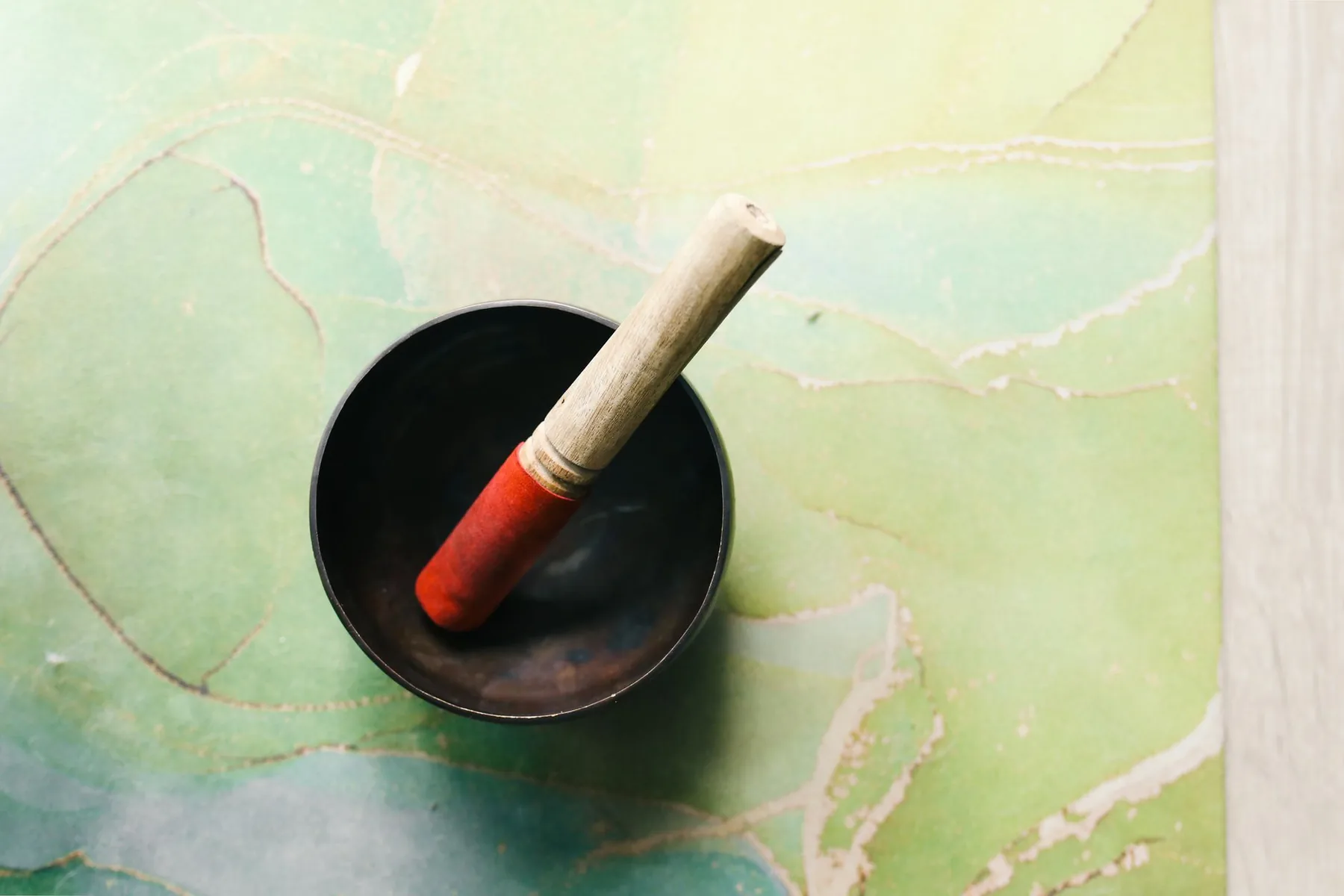
The vibrational quality of a Tibetan singing bowl varies according to the fabric used. Cotton absorbs more waves and softens the note’s attack.
Velvet lets more harmonics through and produces a warmer resonance. Denser brocade may slightly restrict vibrations.
Technique and construction: padding density and weave change how vibrations spread. Natural materials often transmit waves better than synthetic materials.
For a richer sound massage, choose supports that encourage resonance without stifling vibrations.
- Natural material: better vibration transmission.
- Dense fabric: softer effect and less sustain.
- Soft fabric: amplifies harmonics.
Vibration lies at the heart of the experience: choosing the right material is a technical decision for every practitioner.
| Material | Effect on resonance | Recommended use | Note |
|---|---|---|---|
| Cotton | Gentle attenuation | Daily practice | Natural and absorbent |
| Velvet | Warm resonance | Sound massage | Encourages harmonics |
| Brocade | Slight reduction | Display and decoration | May reduce sustain |
| Synthetic | Variable transmission | Occasional use | Less faithful than natural material |
To make an informed choice, read our practical guide to choosing a support. It helps you match the material and technique to the desired effect.
Incorporating Aesthetics into Your Meditation Space
The visual atmosphere often transforms the quality of a meditation session itself. Embroidered decorative supports add warmth and help prepare the mind for calm.
A thoughtfully arranged space makes it easier to relax and refocus your attention before each yoga movement or deep breath.
- Showcasing each instrument on a support with traditional motifs reinforces the sacred nature of the practice.
- Consistent colors and textures contribute to a more immersive, relaxing experience.
- Harmonious décor turns each moment into a ritual and encourages regular practice.
Over ten years of observation, presentation has proved decisive in mental preparation. Improving the appearance of your practice corner enhances the quality of your experience.
Tips for Caring for Your Support Every Day
A few simple steps each week ensure stable, lasting resonance. Gentle cleaning extends the support’s lifespan and preserves sound quality.
Remove dust with a soft brush. Wipe it with a damp cloth if the fabric permits. Avoid harsh products that might impair vibrations.
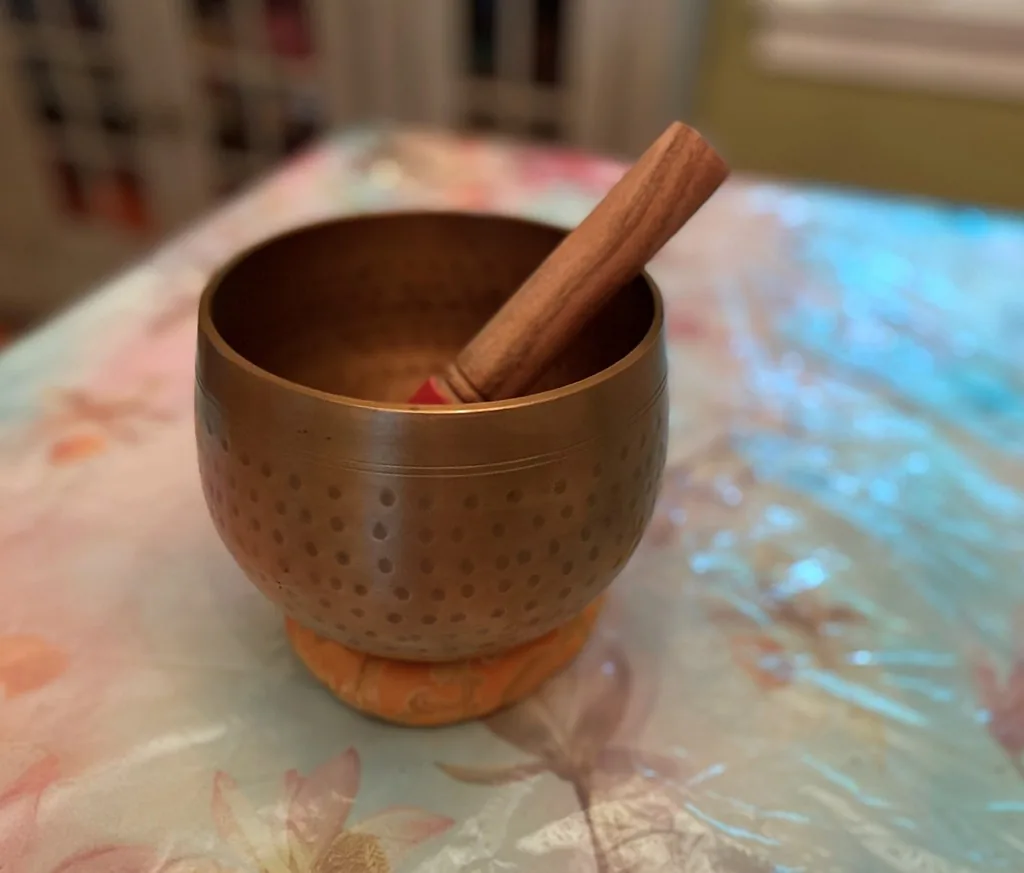
Caring for your cushion is essential to keeping vibrations pure and consistent during sound massage. Regularly check the cushion’s size and shape to ensure perfect stability.
- Gentle cleaning: a few minutes each week is enough.
- Inspection: check its shape and wear before each session.
- Storage: keep the support away from moisture and sunlight.
| Action | Frequency | Effect |
|---|---|---|
| Dusting | Weekly | Maintains vibrational purity |
| Gentle cleaning | Monthly | Preserves fabric quality and durability |
| Size inspection | Before every practice session | Ensures stability and safety |
| Proper storage | After every session | Protects the support and practice space |
These simple tips, applied regularly, ensure better massage technique and lasting sound quality.
Common Purchasing Mistakes to Avoid
Buying the wrong support often ruins the sound experience. Check the measurements before ordering.
Avoid models that are too small or too wide for your instrument’s actual size. An unsuitable base can impair stability and note sustain.
Each type of instrument requires particular care. Do not assume that one universal model fits every size.
- Failing to measure: a common mistake that causes tipping or sagging.
- Ignoring firmness: overly soft padding stifles resonance.
- Being swayed by appearance without checking functionality.
Making the right choice means checking dimensions and, if possible, testing the support. The many options on the market require careful judgment.
Without these checks, your purchase can be a disappointing investment. Follow this advice to avoid unnecessary expense and preserve sound quality.
Conclusion: Choosing the Perfect Support
Choosing a quality support immediately deepens your experience. This decision influences meditation and relaxation by making every note more stable. It focuses your attention and invites calm.
A good cushion provides firm support and preserves sound quality. Vibrations travel more freely, and the harmonics become clearer.
Follow our advice to learn how to choose your support according to its size, material, and intended use. A worthwhile investment enhances your practice and protects your instrument.
In short: caring for the support means caring for your practice and enriching every session.