
Quick overview: This article draws on more than ten years of research into the origins and history of traditional instruments.
The goal is clear: to guide you step by step in determining whether your instrument is a genuine piece or a modern imitation.
We cover essential historical and technical criteria. You will learn to interpret the clues left by the manufacturing process, design and metal composition.
This practical guide provides simple tips you can use immediately. It will also help you advise friends and family when they are considering a future purchase.
Understanding the nature of a genuine Tibetan singing bowl
Understanding the essence of a genuine bowl requires combining history, manufacturing methods and careful listening. The definition remains complex, because no official specification exists for these instruments.
Several specialists believe that only pieces aged 50 to 60 years have significant historical value.
However, age is not the only criterion. An instrument shaped using traditional methods can offer the same quality.
For practitioners, the main criterion remains the quality of the vibrations. They determine how effective the instrument is for meditation and relaxation.
Finally, the scarcity of antique bowls explains their high prices on the antiques market. To learn more, consult this identification guide.
How to recognize an authentic Tibetan singing bowl by its manufacturing method
Traces of craftsmanship remain the best indicator of provenance. Before listening, look closely: the surface and shaping tell the story of the piece.
The role of hand hammering
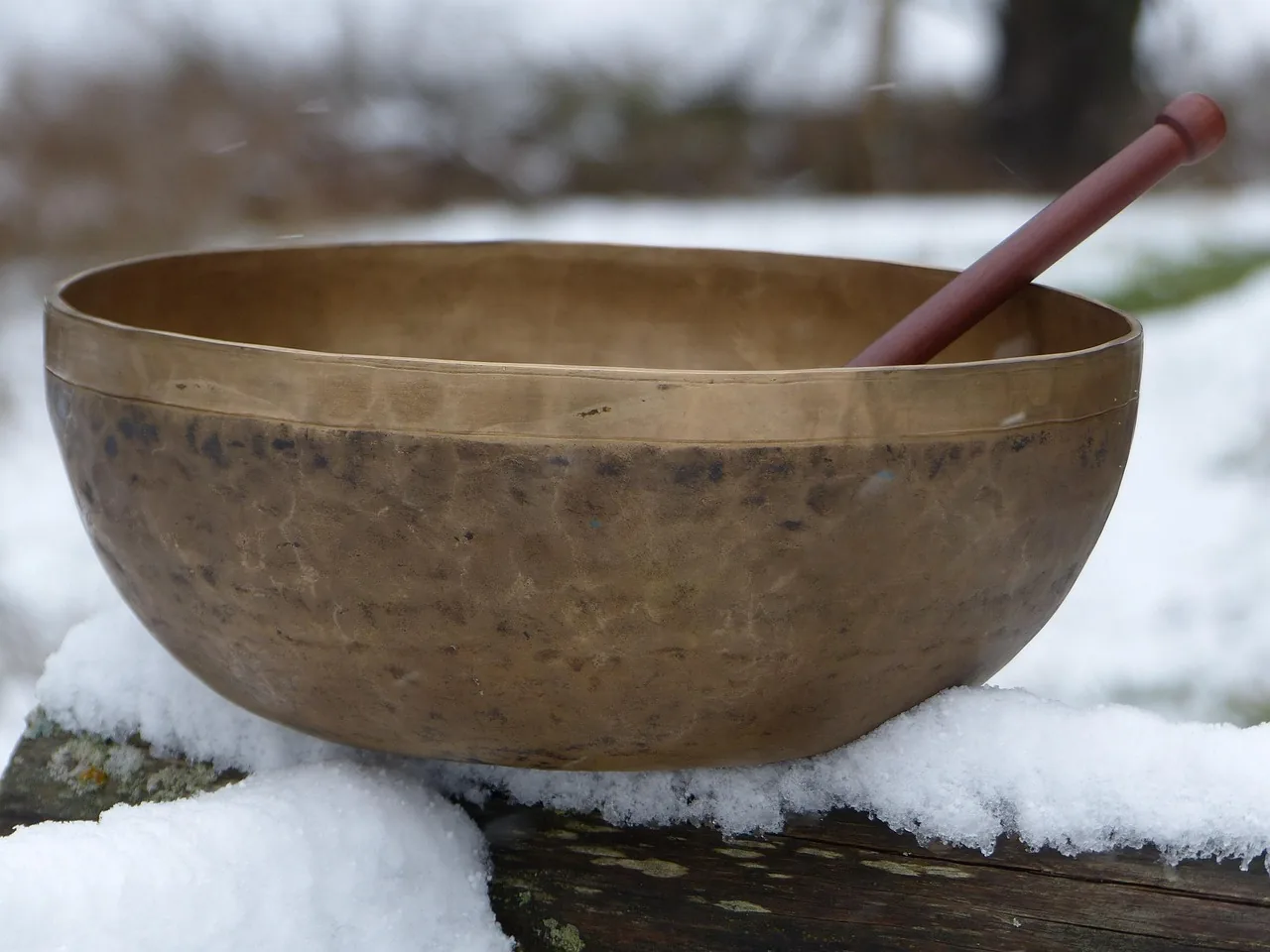
The traditional technique often involves three workers and a foreman. Each worker strikes the heated disc to produce the desired curve and note.
This collective process leaves visible irregularities. These marks are normal and are even sought after by connoisseurs.
The importance of geographical origin
Pay close attention to provenance: Tibet (a territory under Chinese administration since 1950), Nepal, Bhutan and India remain historic production regions.
Molded products, by contrast, have a smooth finish without the characteristic marks of hammering. For more detailed identification advice, consult this identification guide.
Analyzing the materials and metal composition
Understanding the alloys helps distinguish a traditional piece from a modern product. This article explains the differences in appearance and chemical composition. The aim is practical: to help you assess the material without expensive equipment.
Bronze or brass: simple indicators
Bronze is an alloy of copper and tin. It has a predominantly brown hue and produces a rich tone.
Brass combines copper and zinc. Its color tends toward gold or silver. It sounds different and often indicates a less traditional manufacturing process.
- Check the color: brown for bronze, golden for brass.
- Beware of the myth: the seven-metal myth became popular in the West from the 1960s onward.
- Trace elements: the presence of less than 1% of other metals does not guarantee the piece’s true origin.
| Alloy | Composition | Color | Sound profile |
|---|---|---|---|
| Bronze | Copper + tin | Warm brown | Rich, deep |
| Brass | Copper + zinc | Golden or silvery | Clear, brighter |
| Seven metals (myth) | Claimed mixture | Variable | Not guaranteed |
To learn more about the meaning of this myth, see the page devoted to the seven-metal myth.
Identifying the distinctive features of Full Moon bowls
Full Moon bowls bear a ritual signature that can be perceived both on the surface and in the manufacturing technique. Forged on full-moon nights, approximately once every 29.5 days, they are the result of a collective, repeated process.
The lunar manufacturing ritual
Production follows a precise protocol. The artisans recite the mantra “Om Som Somaya Namah” while shaping the bowl. Santa Ratna Shakya, from Patan, Nepal, is often cited as the originator of this practice.
Characteristic engraved symbols
The outer wall frequently bears sacred engravings. The mantra “Aum mani padme hum” is common, as are motifs such as the Shou lotus.
Careful attention to the engraved details helps reveal the object’s spiritual dimension. The composition favors carefully formulated alloys designed to optimize the vibrations and resonance of the instrument.
To deepen your knowledge of the origins and rituals, consult this practical guide: identifying Full Moon bowls.
Assessing sound quality and vibrations
Careful listening often reveals more about sound quality than a visual inspection. A genuine instrument produces deep tones and rich harmonics. These layers of sound distinguish it from counterfeits with a one-dimensional timbre.
The listening technique requires experience: you need to have heard hundreds of instruments to discern subtle nuances. A long sustain—the length of time the sound persists—is a sign of superior quality.
For an objective measurement, a sound-spectrum analyzer can reveal the richness of the harmonics. This tool displays the dominant frequencies and the distribution of vibrational energy.
Advice for beginners: do not rely solely on listening. Inspect the manufacturing process, surface and hammering as well. These physical clues are easier for beginners to assess.
For more detailed inspection methods, consult this guide to assessing the quality of an antique bowl.
Advice for making an informed purchase from professionals
A successful purchase depends as much on the seller as on the object being offered. Choose shops or artisans who explain the provenance and manufacturing method.
Be wary of prices that are too low
Beware of items sold for around €30: they are often molded, industrially manufactured models.
A hand-worked instrument takes time to make and justifies a higher price. Mass-produced pieces have identical finishes and a less complex timbre.
- Check the detailed descriptions and close-up photographs.
- Choose sellers who are transparent about provenance and the manufacturing process.
- Read specialist articles to learn how to recognize the signs of artisanal production.
The French company Instruments du Monde is cited as a trusted source for bowls made using traditional methods. For a practical comparison, consult this comparison of handcrafted Tibetan singing bowls.
Conclusion: assessing the authenticity of your instrument
In conclusion, a visual inspection followed by a sound test remains the best method for assessing an instrument’s value.
Keep in mind that hammer marks and the quality of the vibrations provide reliable clues.
Read other articles on care and maintenance to preserve the resonance over the long term. To learn more, read our guide.
Finally, authenticity guarantees historical and artisanal value, but not necessarily greater therapeutic benefits. Choose what resonates with you and invest in lasting quality.