
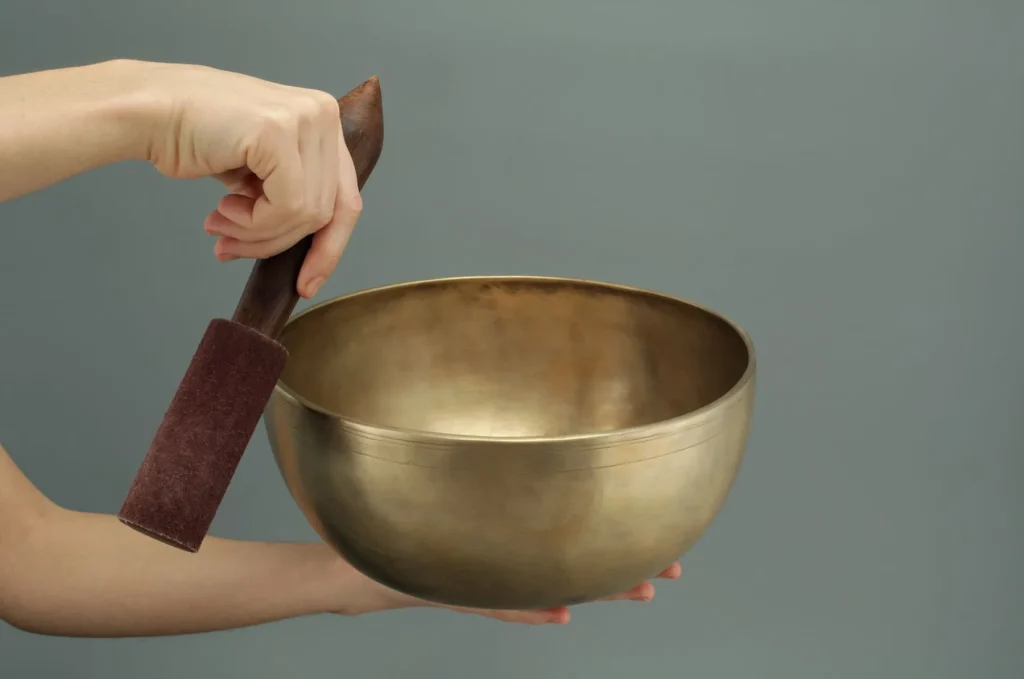
An instrument steeped in history and symbolism, often used in meditation practices in France. This introductory guide explains why these bowls inspire so much fascination.
Academic research, including a 2010 study conducted at the University of Oxford, has attempted to decipher the composition and actual influence of these objects. Here, we distinguish verifiable facts from commercial legends.
You will learn how to recognize an authentic alloy, which metals are traditionally cited, and how this affects sound quality.
This short article guides you through choosing, using, and caring for your bowl to enhance your relaxation experience. For more detailed technical and historical information, visit the dedicated page on Vibratis.
Introduction to singing bowls
In French yoga studios, singing bowls have become simple tools for calming the mind.
Their use is intended to promote relaxation and help people manage stress more effectively during group or individual sessions.
Practitioners report that regularly using a Tibetan singing bowl slows the breathing rate.
- Sound therapy uses vibrations to improve concentration during meditation.
- Far from being mere ritual objects, these instruments are also used for physical grounding.
- Their sustained resonance often makes it possible to feel sound waves in the chest.
“Regular use helps reduce tension and promotes a state of deep calm.”
In short, bowls have become valuable wellness tools in studios, useful for relaxation as well as musical and therapeutic practice.
Historical origins and evolution of the instruments
Material evidence suggests a utilitarian origin that predates ritual use.
Nomadic origins
The earliest vessels came from nomadic traditions. They were used for cooking or collecting alms. Over time, some were shaped to resonate more effectively.
Craftspeople in Nepal developed hand-hammering techniques. They coordinate their movements to achieve an even thickness. This expertise transforms an everyday object into a resonant instrument.
The turning point of the 1960s
In the early twentieth century, travelers such as Perceval Landon made little mention of widespread sound-related uses. This silence in the historical record fuels debate about the practices’ true history.
In the 1960s, tourism and Western wellness movements changed how the bowls were used. They spread as tools for meditation and relaxation.
- Utilitarian origins followed by ritualization.
- Refinement of hammering techniques by Nepalese craftspeople.
- Spread throughout the West after the 1960s.
| Period | Function | People |
|---|---|---|
| Before the twentieth century | Utilitarian vessel | Nomadic communities |
| Early twentieth century | Poorly documented use | Travelers and chroniclers |
| From the 1960s onward | Meditation and wellness | Tourists, practitioners, craftspeople |
To discover examples and manufacturing methods, see this detailed product guide.
Seven-metal Tibetan singing bowls: meaning and distinctive features
Tradition associates each component with a planet or chakra: a symbolic interpretation intended to enhance its use in meditation.
The traditional list includes copper, tin, iron, lead, mercury, silver, and gold. In reality, modern analyses often reveal only minute traces of mercury, lead, or silver.
Most practitioners use these instruments primarily for their symbolism and sound. They are actually made mostly of bronze, whose acoustic quality chiefly depends on the copper-to-tin ratio.
Beware of marketing claims: the term “seven metals” is sometimes used to add value to a bowl without guaranteeing a balanced alloy. Traces of lead or mercury do not imply that either metal makes up a significant proportion of the final alloy.
“Sound quality depends more on thickness, hammering, and the copper-to-tin ratio than on simply listing the metals.”
- Alchemical symbolism associated with the planets.
- Often minute traces of certain elements.
- Sound quality shaped by the bronze and craftsmanship.
Scientific analysis of the metal composition
Laboratory examinations now provide a more accurate picture of the alloys used by metalworkers. Modern techniques can identify the proportion of each element without damaging the object.
Oxford study
In 2010, the University of Oxford analyzed more than 100 instruments dating from the sixteenth to the nineteenth century. The results show that nearly all are made of bronze.
This observation refocuses the discussion of sound quality on the principal material rather than a simple list of components.
Concordia report
The 1995 Concordia report confirms that copper and tin account for more than 99% of the mass. The other elements appear only in trace amounts.
“Copper and tin make up nearly all of the alloy; the other elements remain marginal.”
- The Oxford study: bronze predominates in more than 100 pieces.
- Concordia (1995): copper + tin > 99% of the mass.
- The copper-to-tin ratio affects rigidity, elasticity, and timbre.
- Craftspeople retain processes similar to traditional methods.
- Sound quality depends more on shaping and hammering than on a list of metals.
To explore practical considerations and receive help choosing an instrument, see this dedicated page: guide to singing bowls.
Metal symbolism and planetary correspondences
Hermetic traditions associate each component with a celestial influence.
In this interpretive framework, gold corresponds to the Sun and silver to the Moon. These associations provide a basis for understanding the sacred significance of the seven metals in a ritual instrument.
Each element in the mixture corresponds to a visible planet. Practitioners use these connections to associate the days of the week with specific chakras. This system makes it easier to plan a session around a particular intention.
The symbolism helps structure intention during meditation. It remains primarily a spiritual approach, useful as a ritual framework rather than scientific evidence.
“Planetary correspondences offer a framework for harmonizing the metal’s energy with cosmic cycles.”
- Holistic view: each metal contributes to the overall balance.
- Ritual tool: the alloy guides intention beyond sound alone.
- Temporal reference points: planets and days serve as a symbolic calendar.
The connection between metals and energy centers
Metal correspondences provide a guide for directing intention during a sound session. These associations remain primarily symbolic, but they offer therapists a practical framework.
Root chakra and iron
Iron is traditionally associated with the root chakra to promote grounding. This association is intended to support physical stability and a connection to the earth.
Heart chakra and copper
Copper stimulates the heart center and encourages openness to love. Practitioners sometimes prefer a copper-rich alloy when working on empathy and gentleness.
Crown chakra and lead
In certain Tantric lineages, lead corresponds to the crown chakra and symbolizes inner transformation. Other metals, such as silver, gold, and mercury, complete this system by covering the throat, sacral, and solar plexus chakras.
“These correspondences make it possible to tailor a session to the body’s chosen energetic intention.”
| Energy center | Associated metal | Intended effect |
|---|---|---|
| Root | Iron | Grounding, stability |
| Heart | Copper | Openness, love |
| Crown | Lead | Transformation, elevation |
| Throat / sacral | Mercury / silver | Communication / creativity |
To explore chakra work in greater depth, consult a dedicated guide and follow safe protocols suited to your goals.
The role of copper and tin in sound
Copper and tin form the alloy base that defines the character of the sound. A common proportion in quality instruments is approximately 77% copper to 22% tin.
This mixture creates bronze, the main material responsible for rich harmonics. The proportion of these two metals affects sustain and the purity of the note.
Craftspeople adjust the proportion of copper to produce a deep, warm resonance. Tin adds clarity and high harmonics.
- Base: copper + tin = bronze, which helps keep the note stable.
- Ratio: affects timbre, sustain, and the presence of harmonics.
- Traces of other elements are present, but copper and tin account for more than 99% of the measured mass.
“Precise control of the mixture produces bowls with a consistent, harmonious sound.”
To compare how different alloys and techniques sound, you can also explore examples of sound performances that highlight acoustic quality.
Modern variations and alternative alloys
The search for new sound textures has led some craftspeople to offer alternative compositions.
Zinc, nickel, or cobalt is sometimes added to metal alloys to alter durability and tonal color. These additions change the vibrational response but remain experimental.
Quartz crystal bowls
Quartz crystal bowls provide a metal-free option. Their purity produces a clear, sustained sound valued in modern practices.
Some makers also produce instruments made from 9 or 13 metals. These combinations aim to create unusual timbres but remain rare and are often intended for a specific use.
| Type | Composition | Advantage | Common use |
|---|---|---|---|
| Alternative alloy | Zinc, nickel, cobalt | Tonal color, durability | Experimental |
| Multi-metal | 9 to 13 elements | Distinctive timbres | Custom creations |
| Quartz | Crystalline silica | Sound purity | Meditation, therapeutic sessions |
Note: using more metals does not guarantee better sound quality. Copper and tin remain benchmarks for balance and timbre. Choose an instrument according to its intended use and what you hear, not the number of components.
Methods for verifying the actual composition
Confirming an instrument’s actual composition often requires advanced analytical tools. Spectrometry remains the most reliable method for detecting seven metals and other elements.
This type of examination accurately identifies traces of lead, mercury, or silver.
Home tests are limited. A magnet indicates the presence of iron but cannot confirm the other elements. Visual inspection is not enough.
For a responsible purchase, require transparency from the seller about the instrument’s origin and manufacturing method. Documentary evidence is worth more than marketing promises.
Laboratory analyses often cost several hundred euros, making them inaccessible to many individuals. Sound and craftsmanship remain practical, reliable indicators for evaluating an alloy and its quality before investing.
“The buyer’s best guarantees remain the maker’s transparency and careful listening to the sound.”
- Spectrometry: reliable but expensive.
- Home tests: useful for iron, insufficient for lead or mercury.
- Check the origin and quality of the craftsmanship instead of relying on labels.
Health precautions and safe use
Before any sound session, a few simple rules help ensure safe practice for the body.
Risks associated with heavy metals
Analyses show that traces of lead or mercury are generally very low. Nevertheless, caution remains advisable during prolonged skin contact.
If you have a known sensitivity, avoid placing a bowl directly on irritated skin. Listen from a distance or use a fabric support instead.
- Avoid harsh cleaning methods that could release particles.
- Pregnant women and hypersensitive individuals should limit direct contact.
- If a skin reaction appears, stop using the bowl and consult a healthcare professional.
Alternatives for sensitive skin
People allergic to copper or tin can choose quartz crystal bowls. These instruments offer a metal-free practice.
For body-based sessions, place an insulating cushion between the instrument and the skin. This protects the skin and preserves the metal finish.
| Situation | Recommendation | Advantage |
|---|---|---|
| Sensitive skin | Quartz or fabric support | No direct contact with metal |
| Cleaning | Gentle product, microfiber cloth | Reduces the risk of particle release |
| Pregnancy / hypersensitivity | Listen from a distance, take extra precautions | Limits theoretical exposure |
“Safety depends on vigilance and simple measures: suitable cleaning, supports, and listening from a distance when necessary.”
Therapeutic benefits and relaxation
Sound therapy uses sound waves to induce a state of deep relaxation. The vibrations produced by the alloy affect the nervous system and help reduce stress.
Each note resonates with a specific chakra. This correspondence is believed to promote the harmonization of energy in the body.
Studies report lower cortisol levels after regular sessions. This reduction improves overall well-being and sleep quality.
The diversity of harmonics enriches the meditation experience. The blend of frequencies creates a sound that soothes the mind and steadies breathing.
For migraines or muscle tension, the vibrations of the seven metals may be incorporated into care protocols. These interventions are conducted by practitioners trained in sound therapy.
“Skillful use of resonance encourages a rapid, lasting release of tension.”
| Effect | Mechanism | Common use |
|---|---|---|
| Stress reduction | Reduced cortisol through vibrations | Weekly sessions, relaxation |
| Harmonization | Notes targeting the chakras | Guided meditation, energy work |
| Localized relief | Vibrations directed at tense areas | Supervised therapeutic protocol |
Techniques for making your bowl sing
The subtlety of the movement determines the depth of the vibrations felt in the body. Begin with a stable posture and a relaxed grip on the mallet.
Mastering circular rubbing
Position and pressure: maintain constant pressure and keep the angle between your hand and the rim close to 90 degrees.
Slow, steady rubbing releases harmonics without straining the metal. If you press too hard, the resonance dies away.
To produce a pure note, gently strike the rim, then move into a circular rubbing motion. Keep hand contact light so that you do not dampen the vibrations.
- Vary the mallet size to adjust the sound.
- Strike the rim gently to begin a meditation or relaxation session.
- If you have difficulty, try less pressure and a slower pace.
“Consistent movement transforms a vibration into a wellness tool.”
| Technique | Expected effect | Practical advice |
|---|---|---|
| Circular rubbing | Sustained sound rich in harmonics | Constant pressure, 90° angle |
| Gentle strike on the rim | Clear opening note | Soft mallet, gentle impact |
| Changing mallets | Tonal variations | Try 2 to 3 sizes before the session |
Criteria for choosing a quality instrument
An instrument’s quality is best judged by how it vibrates in your hand and the purity of its note.
Listen to the sound several times: the note should be clear, stable, and rich in harmonics. Hold the instrument while striking it gently to feel the vibrations in your hand. This direct contact often reveals more than a marketing description.
Size and thickness affect sound projection: large models produce deep bass tones that are useful for relaxation and therapy. Smaller ones offer high notes suited to work with particular chakras.
Choose reputable craftspeople who guarantee a uniform copper-and-tin alloy. A carefully controlled mixture provides better sustain and richer harmonics.
| Criterion | Effect | Advice |
|---|---|---|
| Size / thickness | Dominant note, sustain | Try several sizes |
| Vibrations in the hand | Physical sensations | Choose according to your intention |
| Origin / craftspeople | Timbre stability | Ask for evidence and advice |
Before purchasing, try several examples and seek advice from a specialist seller to avoid counterfeits. To refine your choice, consult this guide to singing bowls.
Metal care and storage
A few simple steps are enough to preserve your bowl’s resonance and shine. Always clean it with a soft cloth to avoid altering the finish or sound.
Dry the instrument immediately after any contact with moisture. Oxidation can begin quickly if the metal remains damp.
Store your bowl in a dry place, protected from temperature shocks and dust. A suitable cushion protects the bowl during storage.
- Regular cleaning: use a soft cloth and no abrasive products.
- Dry immediately after contact with water or perspiration.
- Storage: keep it in a room with a stable temperature.
- Occasional polishing: use natural wax to maintain its vibration.
“Consistent care extends the instrument’s life and supports your daily practice.”
| Action | Frequency | Advantage |
|---|---|---|
| Soft cloth | After every use | Preserves the note and shine |
| Drying | Immediately | Prevents oxidation |
| Natural polishing | Once or twice a year | Maintains vibrational quality |
| Protected storage | At all times | Protects against dust and impacts |
To learn more, see this page on singing bowl composition. Following these tips will help maintain a harmonious connection between movement, hand, and note.
Myths and facts about meteorites
A popular belief holds that some instruments contain meteorite fragments. This idea has not been confirmed by modern scientific analyses.
Examinations show that elements such as iron, lead, mercury, or silver occur only in trace amounts. These traces provide no evidence of a cosmic origin.
Symbolism associated with the planets, Sun, or Moon primarily adds perceived value to the object. It does not alter the actual sound, which depends on the copper-to-tin ratio and the craftsperson’s work.
Chakras and the spiritual eye enrich the ritual experience. They shape the practitioner’s intention independently of the metal composition.
“Legend must be distinguished from material heritage to appreciate how the instrument is used.”
| Legend | Scientific reality | Impact on practice |
|---|---|---|
| Meteorite fragments | No evidence of cosmic origin | Little effect on sound |
| Presence of rare metals | Traces of iron, silver, lead, and mercury | Symbolic significance unrelated to their proportions |
| Planets & chakras | Symbolic value | Strengthens intention, not timbre |
Conclusion
In summary, sound quality and your own experience matter more than any marketing label.
The history of these instruments illustrates their evolution from utilitarian objects to recognized wellness tools. Analyses confirm that bronze remains the benchmark for producing rich harmonics.
Try several examples. Choose the one that resonates best with your meditation or relaxation practice. Favor transparent craftspeople and high-quality manufacturing for an authentic, safe experience.
For purchasing advice and further information, consult this practical resource: buying guide and detailed explanations.