
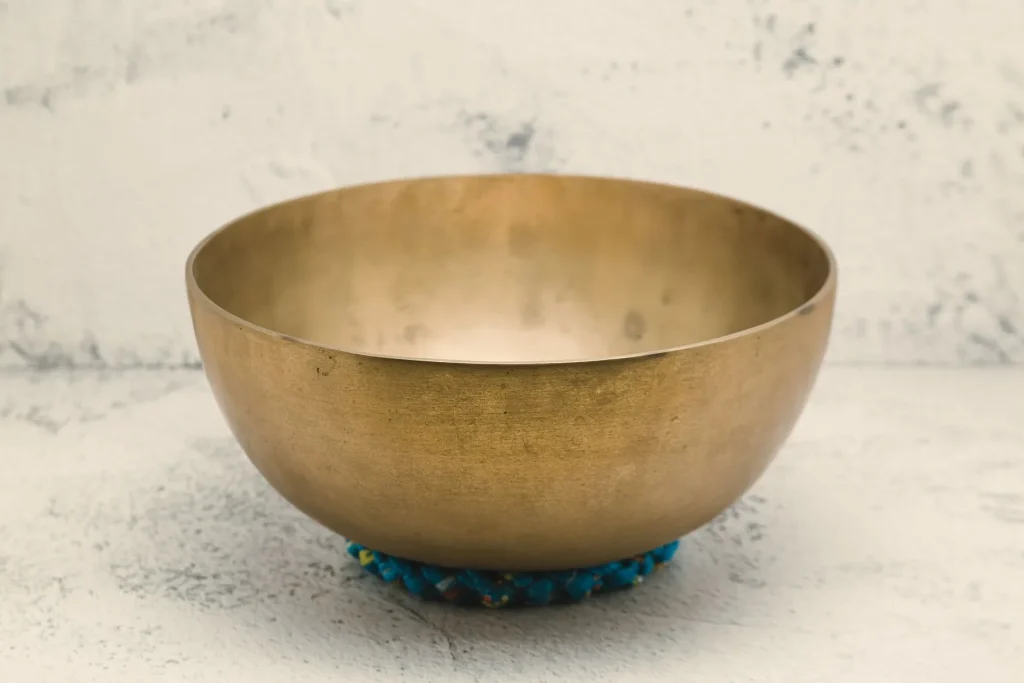
An ancient practice, this sound-based approach uses traditional instruments to invite deep relaxation.
In France, many centers now offer this experience, designed to reduce everyday stress naturally.
The session unfolds as a complete sound immersion. The sounds and vibrations promote harmony between body and mind and help release tension accumulated at work.
Each Tibetan singing bowl emits frequencies that penetrate the tissues and stimulate the body’s self-regulation processes.
This simple treatment may be experienced standing or lying down, depending on the venue. It aims to provide a restorative break and a tangible sense of well-being from the very first session.
Origins and history of singing bowls
These sound instruments come from an ancient heritage rooted in the Himalayan highlands and valleys.
Ancestral tradition
Ancestral tradition
Singing bowls have roots in Tibet, Nepal, India and Japan. They were once used during rituals, meditation and community practices.
Handcrafted production
Handcrafted production
Families of artisans have passed down precise techniques. Each Tibetan singing bowl is hammered and polished by hand to create a unique resonance.
Composition plays a crucial role. A complex alloy often combines as many as seven metals, each adding a distinct harmonic.
- Origin: Himalayan regions and Southeast Asian countries.
- Production: family expertise and traditional forging.
- Materials: multi-metal alloys for high sound quality.
| Region | Historical role | Craft characteristic |
|---|---|---|
| Tibet | Ritual and spiritual use | Family techniques, hand hammering |
| Nepal | Intergenerational transmission | Traditional alloys and engravings |
| India & Japan | Musical and cultural adaptation | Variations in shape and tone |
Tibetan singing bowl massage: benefits and what to expect during a session
The appointment begins with a consultation with the practitioner. This conversation helps assess the person’s health, stress level and expectations.
The treatment takes place in a quiet space. The sounds and vibrations are intended to create deep relaxation in both body and mind.
The average duration ranges from 45 to 75 minutes. This allows time for an immersive experience that may improve sleep and reduce tension.
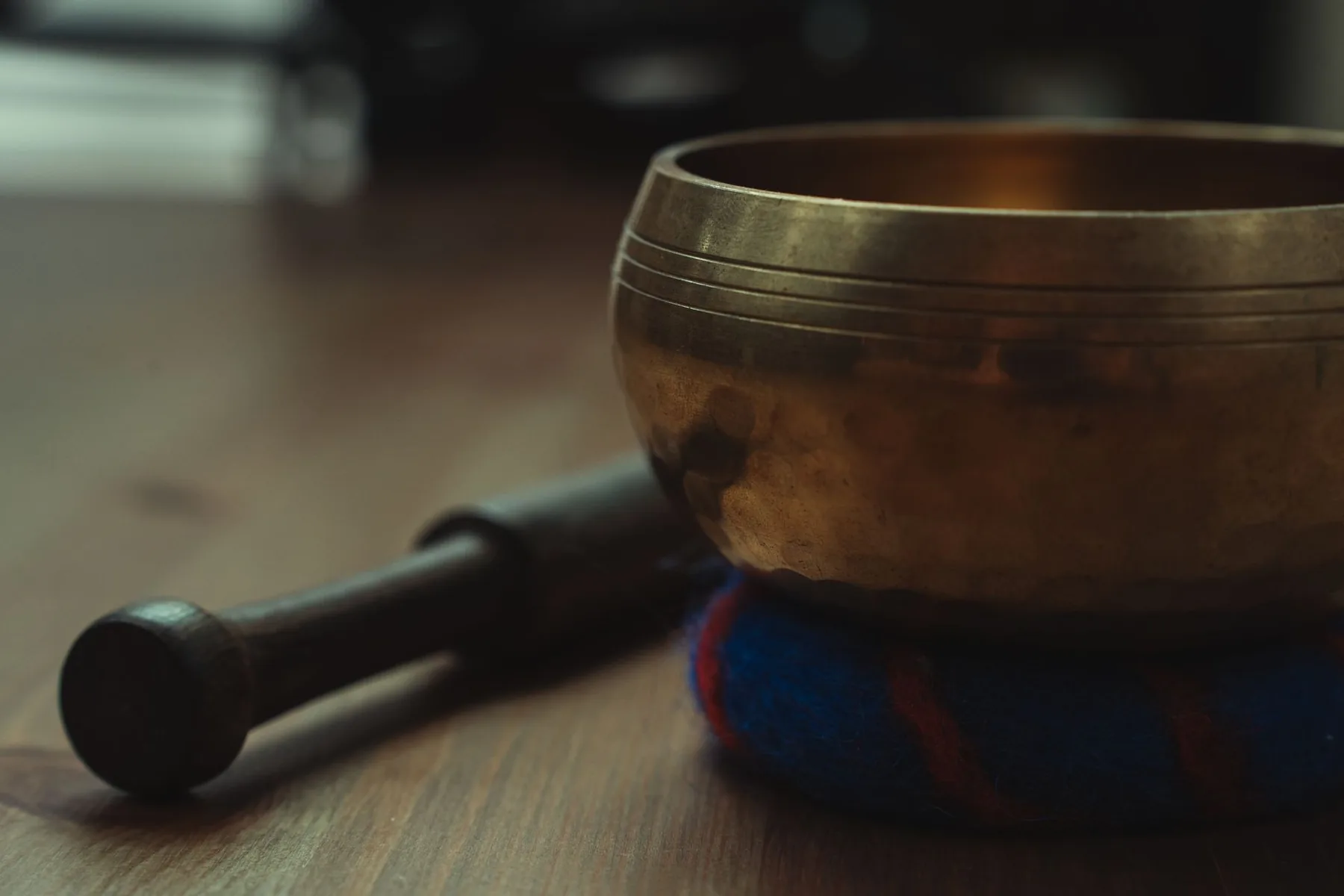
- The practitioner adjusts the intensity and frequency of the bowls’ sounds according to the body’s response.
- The quality of the treatment depends on attentive listening and continuous adjustment of the sounds.
- Regularly incorporating these sessions into daily life may support meditation and emotional balance.
“Observe the effects over several sessions to better understand what works for you.”
To learn more, record how you feel between appointments to optimize the practice and the quality of future treatments.
Vibrational mechanisms and their effects on body and mind
The vibrations produced by the bowls create a subtle interaction with the tissues and conscious awareness. They act on several levels: physical, neurological and emotional.
Striking and rubbing
Striking produces clear sounds that trigger an immediate cellular response. Rubbing generates a continuous resonance that envelops the body and mind.
- The vibrations emitted by Tibetan singing bowls penetrate deep into the body’s cells, promoting overall relaxation.
- The striking technique produces clear impulses, while rubbing creates sustained waves.
- By placing the bowls around the body, the practitioner creates a sound bath that helps induce a state of inner peace.
- Alpha and theta waves, stimulated by these sounds, may be observed during a state of deep relaxation.
- These acoustic mechanisms may release emotional tension and restore balance between body and mind.
“The sounds modulate brain activity and invite a calmer, more centered state.”
To learn more about the theory and research into the effects of sound, consult this resource on sound therapy.
Physical and emotional benefits
Regular practice transforms physical tension into measurable relaxation. Sound massage acts on the body and mind through vibrations and sounds.
Stress reduction
The waves soothe the nervous system and reduce anxiety. Lower stress allows the person to regain a sense of calm.
Restorative sleep
The vibrations promote muscle relaxation and improve sleep quality. After 3 to 6 sessions at regular intervals, many clients report falling asleep faster and sleeping for longer.
- Sound massage helps reduce muscle tension and provides deep relaxation.
- The vibrations stimulate endorphin production, supporting the flow of energy through the body.
- By soothing the nervous system, the Tibetan singing bowl contributes to restorative sleep and a better mood.
- Emotional effects: reduced stress, greater harmony between body and mind and a lasting sense of well-being.
“Repeating the sessions stabilizes mood and improves quality of life.”
To discover the practice and its effects on health, consult this detailed guide.
Mental and spiritual benefits
Sound vibrations often create a space conducive to introspection. They help calm the mind and restore steadier concentration during meditation.
The sounds promote immediate mental clarity. When practiced regularly, this method improves the ability to focus and reduces stress-related rumination.
On an energetic level, the resonances help balance the seven chakras. They promote a harmonious flow of energy through the body and mind.
- Easier entry into meditation, making alpha and theta states more accessible.
- A growing sense of inner serenity over successive sessions.
- A noticeable reduction in stress and improvement in overall well-being.
“Sound acts as a gateway to presence, paving the way for lasting effects on mental balance.”
| Aspect | Main effect | Recommended frequency |
|---|---|---|
| Concentration | Greater mental clarity | 2 to 4 times per month |
| Energy | Harmonious flow of energy through the chakras | Weekly or monthly sessions |
| Emotion | Reduced stress, emotional stability | Noticeable effects after 3 to 6 sessions |
What typically happens during a professional session
Brief introduction: the appointment begins with a conversation to identify needs and medical history. This 5-to-10-minute step helps ensure comfort and confirm that there are no contraindications.
Preparation
The practitioner prepares the space and places the instruments around the body for a gradual immersion.
They check the person’s position and offer cushions if necessary.
This phase includes a brief explanation of the techniques that will be used.
Main phase
Duration: the sound work lasts between 30 and 45 minutes.
The protocol alternates sustained tones with gentle strikes.
The vibrations are intended to create deep relaxation without overstimulating the nervous system.
Integration
After the active portion, a period of 5 to 15 minutes helps the person return to full awareness.
The practitioner discusses how the person felt and offers advice on extending the effects, particularly for sleep and relaxation.
“The practitioner’s attentiveness ensures a respectful experience centered on harmony between body and mind.”
| Stage | Duration | Goal |
|---|---|---|
| Preparation | 5 to 10 minutes | Assess the person’s condition and make them comfortable |
| Main phase | 30 to 45 minutes | Vibrational immersion, deep relaxation |
| Integration | 5 to 15 minutes | Return to awareness and post-treatment discussion |
For a detailed procedure and practical guidance, consult the professional protocol.
Essential precautions and contraindications
The person’s safety comes first: the practitioner must begin by checking their medical history before any session.
Certain situations require particular attention. People with a pacemaker or another electronic device should disclose it. During pregnancy or in cases of epilepsy, it is preferable to avoid direct vibrations on the body and offer a sound bath from a distance.
The alloys and metals in some Tibetan singing bowls may cause skin reactions. The practitioner monitors the skin and adapts the treatment if sensitivity develops.
It is important to adjust the duration and intensity of the sounds to prevent overstimulation of the nervous system, particularly when working near vulnerable areas of the back.
Protect your hearing: avoid striking the bowl close to the ears—some instruments can exceed 80 dB. Maintain a safe distance and monitor any discomfort.
- Stop the treatment immediately in the event of pain, tension or discomfort.
- Adapt the treatment duration to the person’s health and tolerance.
- Promote well-being and restorative sleep by keeping the vibrations at a low intensity.
“When in doubt, caution and an attentive practitioner help safeguard the person’s health and relaxation.”
Sound massage techniques at home
To enjoy the vibrations at home, begin by limiting distractions around you. Choose a quiet, comfortable space with soft lighting.
Start with short sessions: 20 minutes is enough to acclimate the body to the waves. Gradually increase the duration according to your tolerance and the effects you experience.
How you hold the bowl is important. Hold it on an open palm so it can resonate freely without muffling the sound.
Practice rubbing the rim with steady, circular movements around the bowl. This limits shrill sounds and promotes deep relaxation.
Common mistakes
Striking too forcefully produces an unpleasant metallic tone. This sound may interrupt the person’s relaxation.
Do not neglect your surroundings: noise, phones and interruptions disrupt meditation and diminish its effects.
- Avoid forceful strikes; use gentle, controlled taps instead.
- Watch for any sign of discomfort: headaches or ringing in the ears mean you should stop and move the bowl farther away.
- Respect the duration and pace to prevent overstimulation of the nervous system.
“Begin gently, listen to your body and adapt the practice to how you feel.”
For a complete guide and a suitable procedure, consult the professional protocol.
Choosing a relaxation instrument
When choosing an instrument, begin by listening to its resonance and assessing its tone. Handcrafted bronze singing bowls, ideally made from seven metals, offer rich harmonics and lasting sound quality.
A good bowl should have a stable resonance lasting at least 30 to 45 seconds after a gentle strike. This criterion helps ensure an optimal sound experience and deep relaxation.
Large models produce low notes that are useful for grounding. Small bowls promote mental clarity and are better suited to concentration-focused practices.
Test the striking and rubbing techniques before buying to make sure the sounds produced suit your well-being needs. Crystal singing bowls may be an alternative for people who are sensitive to metals.
- Choose handcrafted instruments for stable resonance.
- Check that the sound is sustained for 30 to 45 seconds.
- Care for the instrument with a soft cloth to preserve its patina and vibration.
“Listen to several models: the instrument that moves you is often the one that will accompany you best in your practice.”
Conclusion
In conclusion, these resonances offer a gentle path toward deep relaxation and greater well-being. Regular practice changes how the person feels, reduces stress and promotes sleep.
This complementary treatment can provide valuable support, but it is not a substitute for medical care. Consult a qualified practitioner to tailor the frequency and settings.
Choosing good bowls and observing the precautions helps maximize the effects. With intentional practice, each session becomes an experience of relaxation, harmony between body and mind and mental clarity.
Learn more: explore different techniques, vary the instruments and incorporate these moments into daily life to reinforce the results.