

This practice promotes well-being through sound and vibration. A session begins in a calm space with cushions and blankets. The person remains clothed; the bowls are placed around them or sometimes on their body to create waves.
The initial conversation helps build trust and adjust the duration to the person’s needs. A session often lasts between 60 and 90 minutes, allowing them to reach a state close to meditation.
Effects may include reduced stress, better-quality sleep and greater body awareness. At a wellness center or at home, the practice is sometimes incorporated at the end of a traditional massage.
This guide offers simple advice for understanding how the space, mallet and physical sensations work together. The experience is intended to provide lasting relaxation and a genuine sense of well-being after the session.
Understanding Tibetan singing bowl sound massage: how it works
Resonance transforms a physical impact into waves that can be heard and felt.
The principles of vibrational resonance
A vibrating bowl produces three-dimensional waves that can be heard and felt. These waves travel through the air and then through body tissue. They encourage awareness of internal sensations and progressive relaxation.
The role of vibrations
Singing bowl sound massage is based on the physics of vibration. Each bowl emits its own frequency according to its size and shape.
The influence of metal alloys
The traditional composition is said to include seven metals: gold, silver, mercury, copper, iron, tin and lead. The alloy affects the tone color and richness of the harmonics.
Each instrument is hammered by hand. The craftsmanship determines the clarity and duration of its resonance.
- Three-dimensional waves: physical and auditory propagation.
- Alloy: affects the timbre and duration of the sound.
- Interaction between the body and the waves: enables a more targeted practice.
| Element | Acoustic effect | Practical benefit |
|---|---|---|
| Bowl size | Lower fundamental frequency | Greater depth and long resonance |
| Metal alloy | Richer harmonics | Varied tone color |
| Hammering | Precision and purity of timbre | Consistent vibrational quality |
The benefits of sound therapy for the body and mind
Musical vibrations help create a state of calm and encourage inward awareness.
Preliminary studies suggest that stress and anxiety may decrease after several sound-therapy sessions. This reduction can support better-quality sleep and a steadier mental presence.
During a session, Tibetan singing bowls are often placed near energy points known as chakras. This positioning is intended to rebalance energy flow and support blood and lymphatic circulation.

The practice may also help ease hypervigilance. It encourages deep relaxation and greater body awareness.
- A significant reduction in stress and anxiety and improved sleep.
- Rebalancing of the chakras through the targeted placement of Tibetan singing bowls.
- Deep relaxation, improved circulation and release of muscle tension.
- A useful complement to medical care that may support a lasting meditative state.
- At a wellness center, the use of high-quality metals enhances the practice.
In practice, sounds and vibrations encourage mindful awareness of tension in the body. They offer a gentle way to restore relaxation and well-being.
Preparing your space and body for a successful session
A calm, comfortable setting prepares the mind and body for deep immersion.
Creating an atmosphere that helps you let go
Choose a quiet space with soft lighting. Arrange a mat, cushions and blankets for the person lying down.
Think about clothing comfort: choose loose-fitting clothes without a belt or tight jewelry. This helps vibrations travel through the body and makes it easier to relax.
Allow enough time. A session generally lasts 60 to 90 minutes, although 30-minute formats are available for a shorter practice.
“A well-prepared setting amplifies the effect of the sounds and creates a genuine moment of well-being.”
- Create a quiet atmosphere with soft lighting to encourage deep relaxation.
- Wear comfortable clothing to enhance the experience and the circulation of vibrations.
- Allow 60 to 90 minutes for complete immersion in the sounds.
- Set up the Tibetan singing bowls in a dedicated space to improve the quality of the session.
| Element | Why it matters | Practical advice |
|---|---|---|
| Lighting | Encourages calm | Soft lamp or candle |
| Textiles | Comfort and warmth | Mat, cushions and blankets |
| Clothing | Freedom of movement | Loose-fitting clothes without accessories |
| Time | Immersion | 60 to 90 minutes, depending on the chosen duration |
What typically happens during a sound-relaxation session
A typical session begins with a conversation to identify the needs of the person receiving the treatment.
Welcome and preparation. The practitioner takes time to listen to the person, adjust the session length and determine the desired level of relaxation.
The person lies on a comfortable table and remains clothed. The practitioner places the Tibetan singing bowls around them or sometimes on specific areas of their body.
Main phase. Using a mallet, the practitioner strikes or rubs the bowls to create vibrations and sounds that spread through the space.
The time devoted to this phase allows for deep relaxation and close awareness of physical sensations. The space is arranged to optimize perception and rest.
- An initial conversation to determine the person’s needs;
- Settling onto a table and positioning the bowls;
- Using a mallet to make the bowls vibrate and spread their waves;
- A final period of silence to integrate the effects.
A brief conversation concludes the session so the person can discuss the sensations they experienced, particularly toward the end.
| Stage | Purpose | Approximate duration |
|---|---|---|
| Welcome | Identify needs | 5 to 10 minutes |
| Application | Propagation of vibrations | 40 to 70 minutes |
| Closing | Integration | 5 to 10 minutes |
To learn more about a Tibetan singing bowl session, see this practical resource.
Striking and rubbing techniques for making bowls sing
The quality of the touch determines the clarity and duration of the vibrations produced.
Mastering the mallet technique
The strike should be gentle but confident. A clean impact prevents rattling and produces a clear attack.
For stable sounds, strike the bowl’s rim while maintaining a consistent angle. Avoid abrupt blows that cut the resonance short.
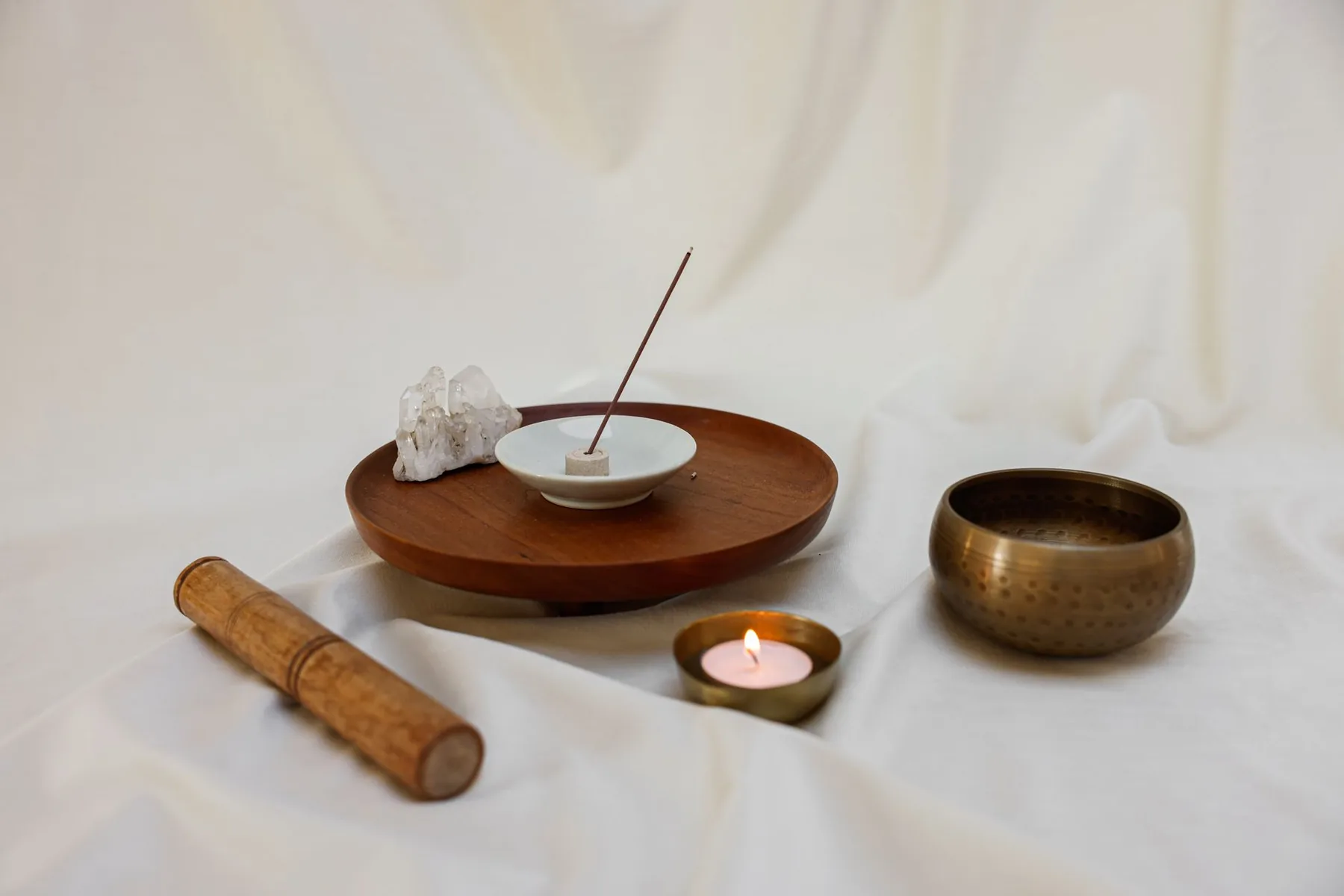
Rhythm and wave intensity
Rubbing requires steady pressure and slow rotation. This technique stabilizes the vibrations and enriches the harmonics.
The practitioner adjusts the rhythm and intensity for different areas of the body. Alternating between rubbing and striking creates dynamics suited to the session.
Practical tips:
- Develop precise mallet control to produce clear, long-lasting sounds.
- Adapt the tempo and volume to the targeted areas to maximize relaxation.
- Listen carefully so you can adjust the bowls’ sound and avoid dissonance.
Each 60-minute session incorporates these techniques to provide a coherent and immersive experience. To explore playing technique in greater depth, see this practice guide.
Choosing your equipment and practice accessories
A thoughtfully assembled kit makes setup easier and improves the quality of the vibrations.
The basic kit includes a felt mallet, a wooden striker and a stable cushion. These three items ensure proper use and keep the bowl securely supported during a session.
Large Tibetan singing bowls produce enveloping low tones, while smaller bowls produce higher sounds. Try several bowls to find the one whose vibration resonates best with your body.
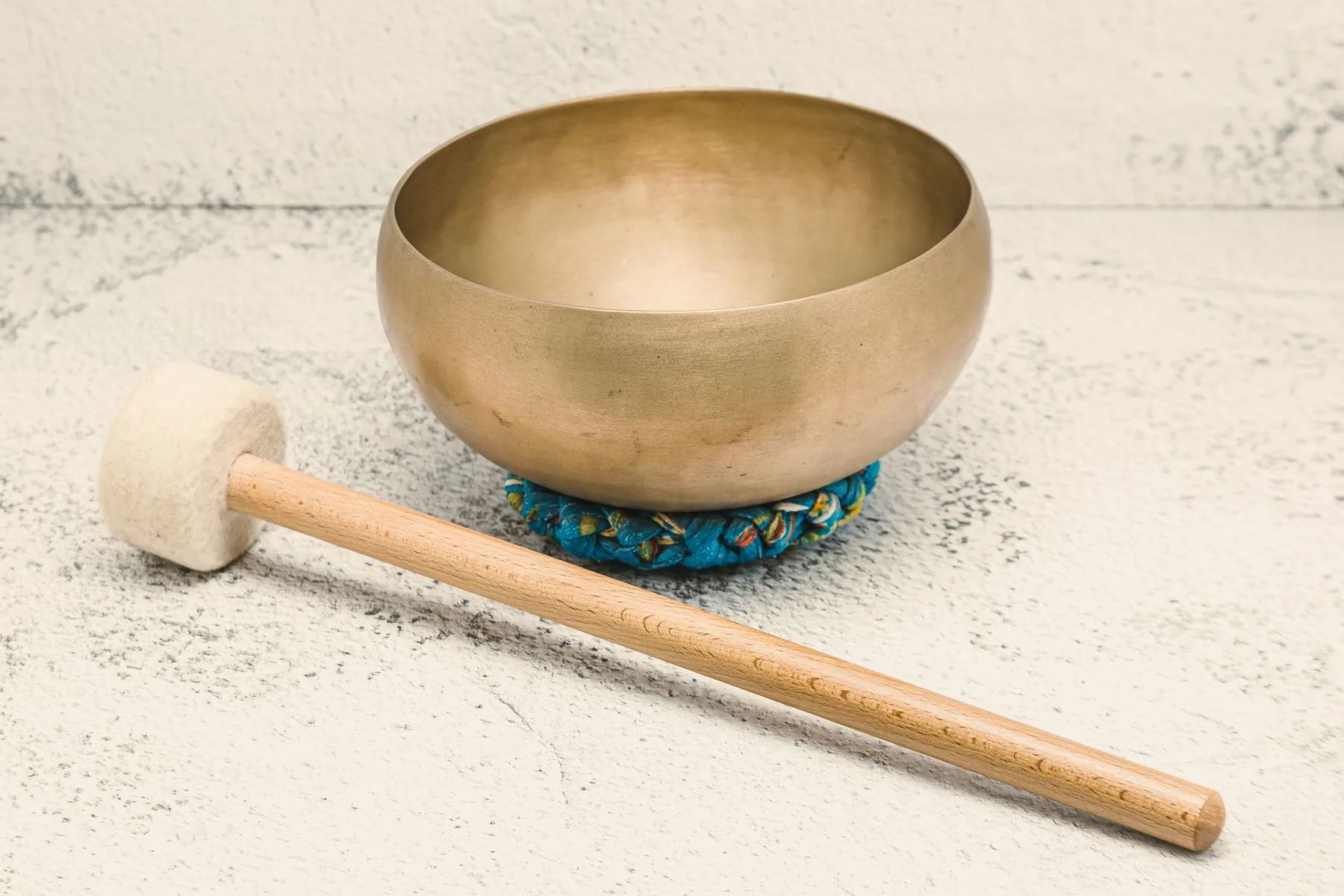
- Choose high-quality bowls made from a carefully formulated metal alloy for greater durability and better sound quality.
- Match the mallet to the size of the bowl to obtain a rich, stable tone.
- Create a dedicated space and store the equipment carefully to encourage attentive listening and regular practice.
Care and longevity: service life depends on maintenance and manufacturing quality. Proper care preserves acoustic performance and protects the investment, particularly in a wellness center.
| Element | Function | Advice |
|---|---|---|
| Felt mallet | Gentle vibration | Choose the size according to the bowl’s diameter |
| Stable cushion | Support and safety | Choose a firm cushion to prevent friction |
| Metal alloy | Timbre quality | Listen to bowls made from several alloys to compare their tones |
Tibetan singing bowl accessories: browse this selection to complete your equipment and optimize every session.
Essential precautions and contraindications
Before any session, it is essential to assess your health and rule out risks associated with sound stimulation.
Consult a healthcare professional if you are pregnant, have epilepsy, use a hearing implant or have a psychiatric condition. These circumstances require medical advice before taking part.
Avoid placing overly heavy bowls on the abdomen or chest. This helps prevent discomfort or unwanted pressure on the body.
Situations requiring medical advice
- It is essential to understand contraindications, such as epilepsy or hearing implants, before using the bowls.
- If you are pregnant or have a psychiatric condition, seek medical advice to ensure the session is safe and appropriate.
- The use of vibrations to manage stress and anxiety should be adapted to each person’s specific needs.
- A 60-minute session can be adjusted in duration and intensity to prevent discomfort.
- The practitioner must always obtain consent before placing bowls on a person’s body, ensuring a respectful practice.
- Use the instruments cautiously to avoid sound stimulation intense enough to affect sleep or health adversely.
| Condition | Risk | Recommendation |
|---|---|---|
| Pregnancy | Hypersensitivity | Consult a healthcare professional before use |
| Hearing implants | Interference | Avoid intense nearby sound sources |
| Epilepsy / psychiatric conditions | Seizure or emotional distress | Obtain medical advice beforehand |
“Safety and consent ensure a respectful and beneficial experience.”
Incorporating sound vibrations into a wellness routine
Ten minutes each evening may be enough to prepare the mind for rest.
Start with a short ritual. Lie down comfortably and use the bowls for ten minutes to help you fall asleep. This brief practice may reduce stress and make sleep easier.
Alternate sessions at a wellness center with practice at home. Sessions with a professional help you consolidate your technique. Regular practice reinforces the benefits for the body and mind.
After each session, drink water and give your body time to integrate the effects. If you have had a busy day, a short session in the evening may be enough to restore a relaxed state.
- Incorporating sound massage into a daily routine helps maintain lasting well-being.
- Practicing for ten minutes each evening may help reduce stress and improve sleep quality.
- Consistency strengthens the cumulative effects and encourages better management of time and health.
“A brief, regular practice quickly becomes a dependable way to calm the mind.”
| Action | Duration | Expected result |
|---|---|---|
| Practice at home | 10 minutes | Easier sleep and immediate relaxation |
| Session at a wellness center | 60 to 90 minutes | Deeper effects and personalized advice |
| Hydration after the session | 3 to 5 minutes | Integration of the effects and physical well-being |
To prepare more effectively for sleep, consult practical resources such as this guide on how to prepare for sleep. Combining sessions with short exercises optimizes the results.
Tips for choosing a qualified practitioner in France
Before booking, make sure the practitioner adapts their approach to your needs and comfort.
Check their training: look for recognized training certificates, including those awarded after courses such as the ones offered by Temana. Training indicates a level of competence in providing treatments based on vibration and touch.
Assess the welcome and the space: a good wellness center offers a calm atmosphere, cushions and a suitable table. Quality equipment includes bowls made from carefully selected metals and an appropriately chosen mallet.
Observe the session: during your first visit, note the duration quoted in minutes, the precision of the movements and the practitioner’s attentiveness. A professional adjusts the vibrations according to your chakras and physical comfort.
- Check reviews and references before booking.
- Compare prices: in France, expect to pay around €40 to €120 depending on the city and the practitioner’s reputation.
- Choose a practitioner who offers complete sound massages or incorporates them into other massages, depending on your expectations.
“Active listening and transparency about training are reliable signs of quality.”
Conclusion
Key points to remember
In summary, mindful listening to sound can contribute to a noticeable reduction in stress and better-quality sleep.
A session, even one lasting only a few minutes, can foster a meditative state and genuine physical relaxation. Regular practice reinforces these benefits and makes well-being a lasting part of everyday life.
Always respect contraindications and consult a healthcare professional when your health requires it. To learn more about medical research and observed cases, read this useful article on research in hospital and clinical settings.
The sensations experienced during each session demonstrate the power of sound waves and confirm that, with time and attentive listening, this practice can become a simple, effective tool for relaxation and well-being.