
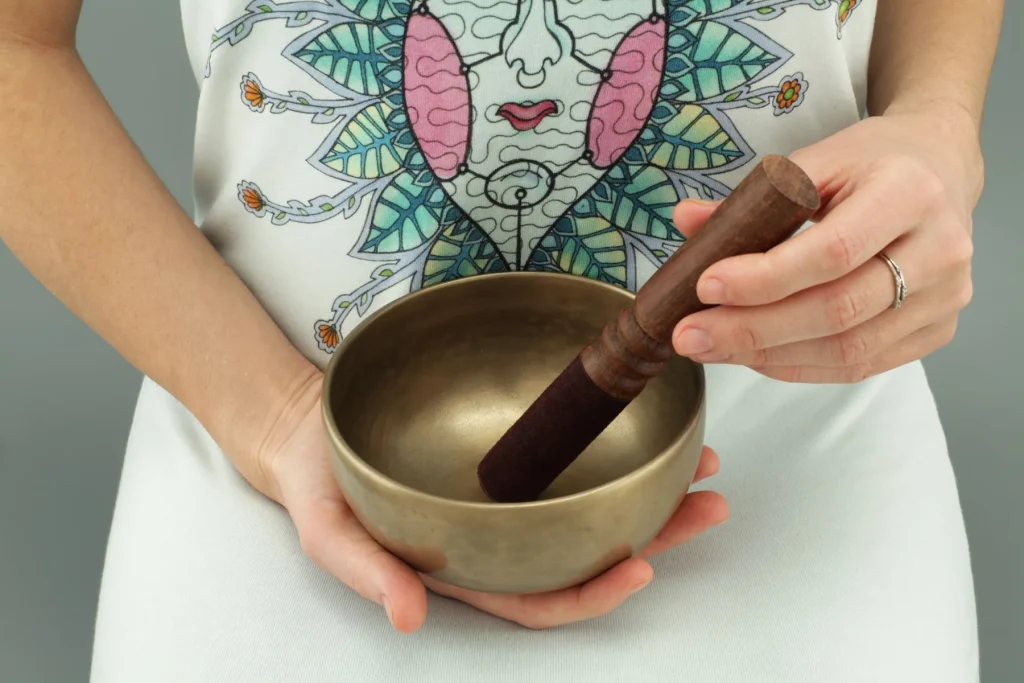
You are looking for a singing instrument for meditation and well-being. Drawing on more than 10 years of study, the author explains how the metal or quartz composition, size, and shape determine its sound and energy.
The material affects how the body and mind experience the vibrations. Hand-hammered alloy bowls offer deep harmonics. Crystal bowls produce more precise frequencies.
The diameter and note determine the frequency suited to a particular chakra. Whether the bowl is handmade or industrially produced affects its sound quality and price.
This article explains how to consider the composition, stand, purification practices, symbols, and mantras to reduce everyday stress. To learn more, read our complete guide to choosing singing bowls.
Understanding the World of Singing Bowls
Singing bowls embody sound traditions found both in Buddhist rituals and in the modern practice of meditation.
These instruments have been used for centuries to calm the mind and rebalance the body’s energy.
The available types vary: some bowls are hammered by hand, while others are mass-produced. The manufacturing method influences the richness of their harmonics.
- Tibetan singing bowls may be made from an alloy of metals to create a deep resonance.
- Their shape and weight affect their frequency and ritual use.
- They are often decorated with symbols evoking tradition and intention.
“These instruments help release stress and restore the subtle flow of energy.”
| Characteristic | Handmade | Mass-produced |
|---|---|---|
| Harmonic richness | High | Variable |
| Price | Higher | More affordable |
| Use | Ritual, meditation | Daily practice |
How to Choose a Genuine Tibetan Singing Bowl by Material
The material influences the tone and intensity of the vibration. For meditation or reducing stress, the bowl’s composition should guide your choice.
Metal Alloy Bowls
Traditional models are often hammered by hand. They are made from an alloy of seven metals: gold, copper, silver, mercury, lead, tin, and iron.
This creates rich harmonics and a diffuse resonance. The shape and size affect the frequency and energy transmitted to the body.
Quartz Crystal Bowls
Introduced in the 1980s, these quartz bowls are industrially produced.
They produce a precise, stable note, making them ideal for anyone seeking an instrument that generates a specific frequency.
“Metal bowls offer warmth and complexity; quartz provides clarity and precision.”
- Use: choose metal for enveloping tones and quartz for targeted notes.
- Practical choice: consider the size, shape, and intended use.
- To learn more: read our detailed guide to choosing singing bowls.
| Material | Characteristic | Recommended use |
|---|---|---|
| Metal alloy | Rich harmonics, handcrafted production | Deep meditation, rituals |
| Quartz | Precise note, modern production | Targeted sound therapy, frequency work |
| Factors | Shape, size, composition | Influence how energy is dispersed |
How Size and Weight Affect Vibration
The bowl’s dimensions and mass determine its tone and how long its vibrations last.
A larger diameter produces lower frequencies. These sounds encourage deep relaxation and an enveloping sensation during meditation.
Conversely, smaller models produce higher-pitched sounds. They can energize the body and punctuate a short practice.
Weight increases exponentially with diameter. A 16-centimeter model therefore weighs considerably more than an 8-centimeter model, affecting portability for travelling practitioners.
- The weight of Tibetan bowls hammered by hand varies with the thickness of the alloy.
- Choosing the right size optimizes the vibrational response for your needs.
- Transport and professional use require a balance between sound and weight.
| Characteristic | Small diameter (≈ 8 cm) | Medium diameter (≈ 12 cm) | Large diameter (≈ 16 cm) |
|---|---|---|---|
| Sound | High-pitched, striking | Balanced | Low, enveloping |
| Weight | Light | Medium | Heavy |
| Recommended use | Stimulation, travel | Regular meditation | Deep relaxation, therapy |
Selecting the Ideal Musical Note and Frequency
The frequency produced by a bowl is often used to guide the body’s energetic balance.
The pitch of a note can help harmonize the energy centers.
The modern standard is 440 Hz, but 432 Hz remains popular for its perceived relaxing effects.
Correspondence with the Chakras
Each note can be associated with one of the seven chakras and may help release a specific area.
Quartz singing bowls offer a precise frequency, making them ideal for targeting 432 Hz or other values.
- Hand-hammered alloy models produce rich harmonics.
- A well-tuned singing bowl produces a clear fundamental note that is useful in therapy.
- Choosing an instrument tuned to 440 Hz is common; some practitioners prefer 432 Hz tuning for meditation.
Frequency influences resonance and its impact on the body during a session.
| Frequency | Benefit | Recommended use |
|---|---|---|
| 432 Hz | Perceived as soothing | Harmonization, relaxation |
| 440 Hz | Versatile musical standard | General meditation, music |
| Quartz precision | Stable note | Targeted therapy, chakra work |
This article explains the importance of Tibetan singing-bowl frequencies for sound practitioners.
Defining How You Will Use Your Meditation Instrument
Thinking about its intended use before buying makes it easier to choose the right size, shape, and composition.
If you want to practise meditation or sound baths, choose Tibetan singing bowls with enveloping vibrations. They can help reduce stress held in the body.
For chakra work or crystal cleansing, a precise note and suitable metal composition are useful. “Full Moon” bowls, made during a full-moon night, follow a tradition intended to maximize the practice’s energy.
Whether you are a musician or energy practitioner, check the size and weight against your daily use and travel needs. The shape and alloy influence the Tibetan bowl’s ability to cleanse a space or recharge stones.
To explore the subject further, read our complete guide and match your instrument to your practice.
The Importance of Visual Appearance and Symbols
An instrument’s appearance often influences the connection we develop with its sounds.
The engravings, the metal’s shine, and the finish help create a calming bond between the user and the bowl.
Common motifs include the Flower of Life, the Tree of Life, and the Om Mani Padme Hum mantra. These symbols add a visible spiritual dimension.
The artisan engraves these motifs by hand into the metals, making each piece unique. This signature enhances the instrument’s ritual value.
Appearance and sound complement one another: the vibrations may seem richer when the piece is beautiful and carefully crafted. The result touches the body and mind.
- A beautiful object encourages regular use.
- The symbols can guide your intention during meditation.
- Considering appearance when making your choice encourages a lasting connection with your instrument.
“Outer beauty encourages inner attention.”
| Element | Visual impact | Effect on practice |
|---|---|---|
| Sacred engravings | Strong presence | Reinforce intention |
| Patina and shine | Soothing appearance | Encourage practice |
| Artisan’s signature | Unique | Energetic significance |
To learn more about the appearance and meaning of engravings, read our dedicated guide.
Tips for Giving a Singing Bowl as a Gift
A thoughtfully chosen sound gift can introduce someone close to you to meditation.
Choose a versatile piece. For a first experience, a metal Tibetan bowl measuring 12 to 17 cm is suitable for most uses. It produces pleasing harmonics and remains easy to handle.
Hand-hammered singing bowls are valued for their authenticity. They offer better sound quality than industrial models.
Keep your choice simple: there is no need to select a precise note at first. The recipient can explore different types of bowls and frequencies later.
- Include a suitable mallet so the recipient can make the instrument sing as soon as it arrives.
- Choose an attractive, durable set to encourage regular use.
- Mention the recommended use—meditation, relaxation, or sound baths—in a short note.
“A well-chosen meditation instrument opens the door to well-being and relief from everyday stress.”
| Element | Suggestion | Why |
|---|---|---|
| Diameter | 12 to 17 cm | Versatile and suitable for beginners |
| Material | Hand-hammered metals | Harmonic richness and authenticity |
| Accessory | Suitable mallet | Allows immediate use of the instrument |
Buying Online or in a Physical Store
The choice between buying online and shopping in a store mainly depends on how important a sensory experience is to you.
Benefits of Listening Online
Specialist websites often provide audio samples. They help you identify the note and assess the sound quality for relaxation or chakra work.
Instruments du Monde offers more than 200 models. This makes it easier to find an instrument suited to cleansing practices or one that produces a precise frequency.
The In-Store Experience
In a store, you can touch the metal and test how the bowl feels in your hands. This experience lets you evaluate it in use and find the ideal size for your practice.
Pay close attention to manufacturing quality: hand-hammered pieces and industrial models can be very different.
“A hands-on trial lets you assess stability on a stand, harmonic richness, and ease of use.”
| Buying method | Key benefit | What to check |
|---|---|---|
| Online purchase | Audio recordings, wide selection | Availability of audio samples, return policy |
| Physical store | On-site tactile and listening test | Stability on a stand, ease of handling |
| Advice | Combine both | Listen first, then test before buying |
Conclusion
In summary: to find the right instrument, consider your preferences, budget, and intended use.
We have compared metal and quartz models and explained how size and frequency affect vibration. These factors help you identify a sound suited to your practice.
Your personal response remains the key: let your hearing and physical sensations guide you during a trial. To continue your research, read our dedicated guide to choosing singing bowls.
Good practice: use the bowl regularly so that this sound instrument can become a lasting source of serenity.