

The vocal legacy of Maria Callas continues to fascinate the entire world. Her exceptional talent is showcased in the biopic “Maria,” in which she is portrayed by Angelina Jolie. The film explores not only her meteoric career but also the technical characteristics of her voice.
Gifted with a three-octave range, she made opera history. Yet her vocal timbre often sparked controversy. Despite her physical imperfections, her artistic genius remains unrivaled.
A scientific study analyzed her recordings over a decade, revealing unique nuances. This analysis explains why her voice is considered an extraordinary phenomenon.
Introduction to Maria Callas
From New York to Paris, her destiny unfolded to the rhythm of opera. This exceptional artist left her mark on the 20th century through her talent and determination. Her journey, from humble beginnings to worldwide acclaim, remains a source of inspiration.
An opera icon
Born in New York in 1923, she grew up in a family of Greek immigrants. Her birth name, Kalogeropoulos, was shortened to Callas to help her career. From an early age, she showed a deep interest in music.
Recognized as a dramatic coloratura soprano, she redefined the standards of operatic art. Leonard Bernstein even called her “the Bible of opera,” a testament to her influence.
The birth of a legend
Her dual Greek-American nationality played a key role in her journey. Until 1966, she moved between these two cultures, enriching her art. Her impact on modern opera remains unmatched.
- Historical context: New York, 1923–Paris, 1977
- Transformation of the name Kalogeropoulos into Callas
- Recognition as a “dramatic coloratura soprano”
- Lasting impact on operatic art in the 20th century
- Dual Greek-American nationality until 1966
Her legacy continues to inspire new generations, making her a true legend.
Maria Callas’s early years
The first years of her life were marked by challenges that shaped her destiny. Born into a family of Greek immigrants, she grew up in an unstable environment. An accident at the age of five, followed by a concussion, profoundly affected her childhood.
A childhood marked by insecurity
Her early years were shaped by family conflict and an inferiority complex concerning her appearance. Her mother, Evangelia, played a decisive role in her artistic vocation. Despite these difficulties, she found refuge in music and developed an early passion for opera.
Her first steps in the world of opera
At just 15, she entered the Athens Conservatoire, where she began perfecting her craft. In 1941, during the Nazi occupation, she secured her first major role in Tosca. These early appearances on stage marked the beginning of a career that would revolutionize operatic art.
Maria Callas’s voice: a unique instrument
Her vocal timbre, both powerful and delicate, redefined the standards of operatic art. Gifted with an extensive range, she captivated listeners with her nuance and expressiveness. This section explores the technical qualities that made Callas’s voice an extraordinary phenomenon.
The characteristics of her voice
Analysis of her recordings reveals a distinctive vibrato that evolved over time. Compared with the sopranos of her era, she stood out for her strategic use of nasal resonance. These qualities, combined with unique anatomical features of the larynx, contributed to her inimitable vocal style.
A three-octave range
Her vocal range extended across nearly three octaves, a rarity in the world of opera. However, the quality of her low notes compared with her high notes often divided critics. Despite these controversies, her technical command remains a model for modern artists.
- Evolution of her vibrato between 1952 and 1962.
- Comparison with the sopranos of her era.
- The role of nasal resonance in her style.
- Anatomical characteristics of the vocal cords.
- Recordings documenting her career.
Maria Callas’s intensive training
Discipline and passion guided every stage of her artistic journey. To achieve excellence, she devoted years to perfecting her singing under demanding mentors such as Elvira de Hidalgo.
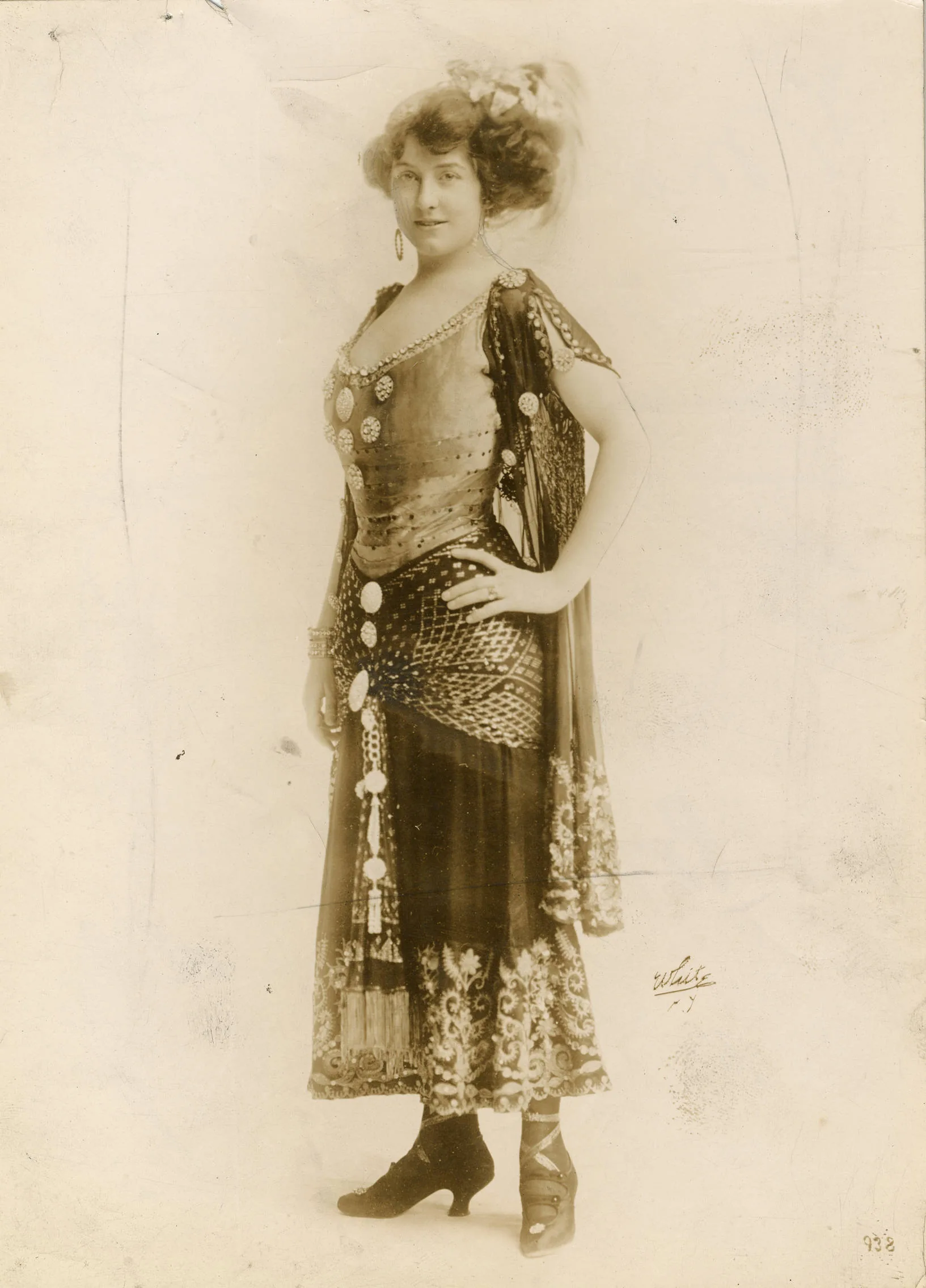
The rigor of her training
Her daily routine included eight-hour vocal-training sessions. She mastered diaphragmatic breathing techniques, which were essential for performing demanding roles. This discipline enabled her to adapt her style to varied repertoires, from bel canto to verismo.
The vocal challenges she overcame
After having her tonsils removed, she had to relearn how to use her voice. She could memorize complex scores in just 48 hours, proving her determination. These challenges forged an artist capable of transcending the limits of time and operatic art.
Maria Callas’s meteoric career
The great international stages witnessed her artistic genius. Between 1947 and 1965, she gave 287 performances, making opera history through her talent and innovative spirit. Her signature roles, including Norma, Tosca and Medea, redefined the expectations of audiences and critics.
The roles that defined her career
Norma, Tosca and Medea are emblematic examples from her repertoire. She performed each role with unmatched dramatic intensity and technical mastery. These performances not only captivated listeners but also influenced subsequent generations of opera singers.
The impact of her interpretations on opera
Her innovative approach revolutionized operatic staging. Working with figures such as Luchino Visconti, she introduced innovations in consonant articulation and emotional expression. The concept of “BC/AC” (Before/After Callas) illustrates her lasting influence on modern opera.
| Role | Year | Venue |
|---|---|---|
| Norma | 1952 | La Scala, Milan |
| Tosca | 1953 | Metropolitan Opera, New York |
| Medea | 1959 | Covent Garden, London |
How Maria Callas transformed opera
The world of opera was profoundly changed by an artistic revolution. In the 20th century, an innovative approach redefined the expectations of audiences and critics. This transformation was led by an artist whose influence remains unrivaled.
Before and after Callas: a new era
The integration of realistic acting overturned traditional conventions. Performances were no longer limited to singing but acquired psychological depth. This innovative fusion allowed audiences to become fully immersed in the characters’ emotions.
Moreover, the pioneering use of surtitles made works more accessible. This initiative had a lasting effect on how opera is perceived and appreciated.
The importance of acting in her performances
Acting became a central element of her interpretations. A hunched posture, for example, was used to heighten her expressiveness on stage. This attention to detail influenced acting direction in modern opera.
Finally, the creation of a European school of interpretation consolidated her legacy. This approach encouraged generations of artists to push the boundaries of their art.
The decline of Maria Callas’s voice
Over the years, her voice underwent inevitable changes. As early as 1956, at the age of 33, the first signs of deterioration became audible. This evolution was documented through recordings that trace her vocal journey.
A comparative study of her performances in Tosca and Nabucco reveals significant changes. Researchers found that her voice became increasingly sharp, uneven and unstable. These observations are supported by spectrographic analyses of vocal formants.
The first signs of deterioration
A loss of consistency in legato passages was among the first indicators. Growing difficulty with sustained high notes also characterized this period. These problems were highlighted by recordings made between 1953 and 1964.
Recordings that document her decline
Technical comparisons between EMI recordings from 1953 and 1964 reveal a striking evolution. Conductors of her era also testified to these changes. This evidence confirms that time had an undeniable impact on her vocal instrument.
| Recording | Year | Observations |
|---|---|---|
| Tosca | 1953 | Powerful, stable voice |
| Nabucco | 1964 | Irregularity and instability |
To learn more about this subject, read this article on her vocal decline.
The reasons for her vocal decline
The demands of the operatic world left indelible marks on her vocal instrument. The particularly demanding Wagnerian roles she performed early in her career damaged her larynx. These strains, combined with frequent dehydration of the mucous membranes, accelerated the decline of her vocal abilities.

Repeated virtuoso ornamentation, however spectacular, took a toll on her vocal cords. Relentless international tours also contributed to the progressive wear of the thyroarytenoid muscle. Together, these factors made her instrument increasingly fragile over time.
The consequences of her demanding roles
Dramatic roles such as Norma and Tosca required extreme vocal and emotional intensity. This constant pressure weakened her larynx, causing irregularities in her performances. Gastroesophageal reflux, common among opera singers, made the situation worse.
The impact of her vocal technique
Although revolutionary, her vocal technique sometimes placed severe strain on her vocal cords. Her intensive use of nasal resonance and sustained high notes contributed to premature wear. These stylistic choices, though distinctive, compromised the preservation of her instrument.
| Factor | Impact |
|---|---|
| Wagnerian roles | Damage to the larynx |
| International tours | Muscular wear |
| Vocal technique | Weakening of the vocal cords |
The role of her personal life in her decline
Events in her private life played a crucial role in her artistic journey. Emotional ordeals and turbulent relationships left indelible marks on the expression of her talent. Among these events, her relationship with Aristotle Onassis was particularly significant.
Her relationship with Aristotle Onassis
Her affair with Onassis, which began in the 1950s, was both passionate and destructive. Their breakup in 1968 caused profound emotional shock. She lost 8 kg in just three months, a tangible sign of her distress.
This period also coincided with changes in her posture and breath support. Contemporary accounts mention episodes of situational aphonia, during which stress caused her to lose her voice temporarily.
Grief and its effects on her voice
Grief had a direct effect on her vocal instrument. Analyses of recordings made after 1960 reveal increased laryngeal tension, probably linked to depression. This tension contributed to growing instability in her performances.
Experts also note a correlation between her emotional state and technical changes in her singing. This period marked a turning point in her career: personal difficulties began to overshadow her artistic genius.
Maria Callas’s extreme diets
This artist’s lifestyle choices were often as bold as her performances. Among them, her extreme diets marked a turning point in her career. Inspired by icons such as Audrey Hepburn, she embarked on a dramatic weight loss, shedding 35 kg in a short time.

This physical transformation was not without consequences. The methods she used, some of them dangerous, directly affected her health and vocal instrument. A 500-calorie-per-day diet and controversial practices weakened her body and her art.
Her dramatic weight loss
Over the years, her figure changed radically. This rapid weight loss was motivated by a desire to resemble the stars of the time. However, these extreme methods caused serious side effects, including atrophy of the intercostal muscles.
Changes in chest resonance also affected her diaphragmatic support. These changes had a direct impact on her ability to produce powerful, stable sounds.
The consequences for her vocal cords
Her vocal cords were particularly affected by these drastic diets. Reinke’s fat, which is essential to vocal-fold vibration, diminished, thereby affecting her voice. Recent studies have confirmed that this loss of adipose tissue altered the quality of her singing.
These transformations marked a turning point in her career: physical difficulties began to overshadow her artistic genius. The consequences of these extreme choices remain a subject of study for voice specialists.
| Effect | Consequence |
|---|---|
| Muscle atrophy | Weakened diaphragmatic support |
| Reduction of Reinke’s fat | Altered vocal-cord vibration |
| Changes in resonance | Changes in vocal projection |
Maria Callas’s health
This artist’s health played a key role in her vocal journey. In the years that followed her debut, medical problems began to affect her ability to perform on stage. These difficulties contributed to the gradual decline of her unique instrument.
The health problems that affected her voice
Several conditions directly affected her singing. One was dermatomyositis, an autoimmune disease diagnosed posthumously. The condition causes skin and muscle symptoms and can restrict laryngeal mobility.
Histological biopsies revealed significant abnormalities. Despite treatment with prednisolone, the side effects of corticosteroids weakened her vocal mucosa. Because of these complications, her instrument was no longer as reliable as before.
Dermatomyositis and its effects
This disease had major consequences for her career. Initial diagnostic errors delayed appropriate treatment. Early symptoms, such as muscle pain, limited her ability to deliver demanding performances.
Although necessary, the treatments also had harmful effects. Corticosteroids used to reduce inflammation thus altered the quality of her voice. These difficulties marked a turning point in her artistic journey.
Maria Callas’s reputation as a diva
Her artistic demands and cancellations sparked considerable debate. Her status as a diva was often associated with controversy and difficulty, particularly in the world of opera. Between 1952 and 1959, she canceled 96 performances, a fact that marked her career.
Performance cancellations
Cancellations were a recurring issue throughout her career. These decisions, often connected with conflicts involving opera houses, fueled her reputation. Her strained relationship with Rudolf Bing of the Metropolitan Opera, for example, became legendary.
These cancellations were not mere whims. They reflected her artistic standards and refusal to compromise the quality of her performances. This sometimes led to crises, such as the one at La Scala in Milan in 1958.
Callas’s artistic demands
Her rigorous approach redefined standards in the world of opera. She attached great importance to technical details, such as stage lighting, to create an immersive experience. These demands were often perceived as whims, but they reflected her commitment to art.
Her contractual policy was equally strict. She refused to perform under conditions she considered inadequate. This rigor influenced artist management in the opera industry.
“She transformed the expectations of artists and opera houses, leaving a lasting managerial legacy.”
| Event | Year | Impact |
|---|---|---|
| Conflict with Rudolf Bing | 1956 | Cancellation of several performances |
| La Scala crisis in Milan | 1958 | Changes to contractual practices |
| Technical demands | 1950s | Innovation in staging |
Maria Callas’s legacy
Her influence continues to resonate throughout the world of opera, inspiring today’s artists. Even after she left the stage, her impact remains evident in teaching and culture. This legend left her mark on the last century through her genius and determination.
Her influence on later generations
This artist’s vocal techniques inspired modern teaching approaches. Renowned sopranos such as Cecilia Bartoli and Anna Netrebko acknowledge her influence. Conservatories around the world incorporate her methods into their programs.
Remastered reissues of her Warner recordings allow new generations to discover her art. Scholarships bearing her name are awarded to support young talent.
Tributes and recognition
Numerous tributes have honored this icon. In 2007, she received the Grammy Lifetime Achievement Award in recognition of her contribution to music. A star bearing her name was unveiled on the Hollywood Walk of Fame.
The Museo Teatrale alla Scala houses permanent exhibitions dedicated to her career. These initiatives demonstrate the importance of her legacy in the history of opera.
- Vocal teaching inspired by her techniques.
- Permanent exhibitions at the Museo Teatrale alla Scala.
- Influence on Cecilia Bartoli and Anna Netrebko.
- Remastered reissues of Warner recordings.
- Callas scholarships at conservatories.
Maria Callas in popular culture
Cinema has often sought to capture the essence of legends, and Maria Callas was no exception. The biopic directed by Pablo Larraín, starring Angelina Jolie, brought this opera icon back to life. Filmed in Paris and Milan, the film attracted keen interest for both its cast and its artistic approach.
The biopic starring Angelina Jolie
Angelina Jolie immersed herself in the role of Maria Callas for seven months, undertaking rigorous vocal preparation. Motion-capture techniques were used for the operatic scenes, creating a realistic portrayal of the performances. Renowned soprano Joyce DiDonato provided her voice for the dubbing, enhancing the authenticity of the interpretation.
The portrayal of her life on screen
Pablo Larraín’s artistic choices were praised for their boldness. The director chose to focus on key moments in Maria Callas’s life while exploring the deep emotions that shaped her career. The opera community responded enthusiastically, recognizing the tribute paid to this legend.
Compared with earlier adaptations, this film stands out for its attention to detail and faithfulness to Maria Callas’s legacy. Released in February, it marked a turning point in how opera singers are portrayed on screen.
Maria Callas’s recordings
This artist’s recordings captured the essence of her vocal genius. They remain essential references in the world of opera today. Innovative techniques immortalized her performances, offering unique insight into her art.
The works that made history
Her EMI discography, considered a benchmark, includes legendary interpretations. Roles such as Norma and Tosca redefined the standards of operatic art. These recordings testify to her ability to convey profound emotion.
Her partnerships with artists such as Di Stefano and Gobbi also made history. Their collaboration produced unforgettable performances that are still studied today.
Analysis of her vocal performances
Experts have extensively analyzed her voice, revealing unique technical nuances. Previously unreleased alternative takes demonstrate her meticulous approach to every note. These details explain why she remains a major figure in opera.
Masterclasses based on her recordings are used to teach vocal techniques. They give young artists the opportunity to draw inspiration from her genius.
Finally, digital reorchestration projects bring her performances back to life, offering a new perspective on her career.
Conclusion
Her vocal artistry continues to inspire new generations and shape the history of opera. Current medical research explores the technical characteristics of her voice, revealing lesser-known aspects of her genius. These studies explain why she remains an essential reference in the operatic world.
In the age of music streaming, her legacy is reaching a new audience. Digital platforms make it possible to rediscover her performances and immerse oneself in her timeless art. This phenomenon underscores the importance of preserving this cultural heritage for future generations.
Her artistic message, both powerful and moving, transcends eras. It reminds us of the need to protect and celebrate the operatic heritage of the last century. Her influence therefore endures, bearing witness to the immortality of her talent.