
A new biography based on previously unpublished archives casts fresh light on the life of one of the greatest divas of the century. Bequeathed in 2019, these documents reveal little-known aspects of her life, marked by family conflicts, artistic rivalries and physical suffering.
Written by Lyndsy Spence, the book examines more than 70,000 documents, including personal letters and diaries. These writings reveal a tragic destiny that contrasts with the artistic glory that made her a legend.
Blending myth and reality, this biography offers a new perspective on a woman who was both powerful and vulnerable. It is essential reading for understanding the legacy of this icon.
Introduction to the life of Maria Callas
Born in New York in 1923, Maria Callas left her mark on opera history through her exceptional talent. Her childhood, shaped by a traumatic move to Greece at the age of 13, forged her character and determination. Despite being mocked for her appearance, she displayed an extraordinary vocal gift from an early age.
Trained at the Athens Conservatoire under Elvira de Hidalgo, she refined her technique and developed a unique voice. Her physical transformation in 1953, inspired by Audrey Hepburn, marked a turning point in her career. She became an indispensable diva, embodying both strength and fragility.
An opera icon
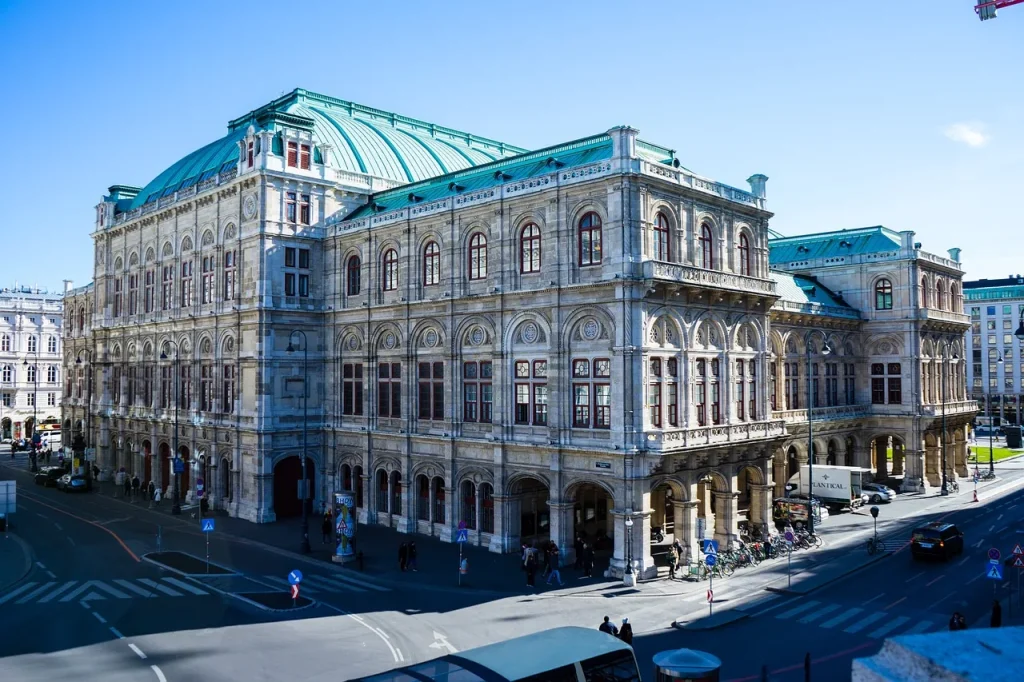
Her triumph at La Scala in Milan under the direction of Luchino Visconti cemented her legendary status. She performed demanding roles with rare dramatic intensity, captivating audiences around the world. Her talent transcended borders, making her a universally admired opera singer.
The myth of La Divina
Behind the public persona of “La Callas” was a vulnerable woman shaped by personal ordeals. Her journey between glory and tragedy helped forge the myth that still surrounds her name today. She remains an iconic figure whose legacy continues to inspire new generations.
| Year | Event |
|---|---|
| 1923 | Born in New York as Maria Anna Cecilia Sofia Kalogeropoulos |
| 1936 | Moved to Greece after her parents separated |
| 1953 | Physical transformation and triumph at La Scala in Milan |
Maria Callas’s romantic relationships
The diva’s romantic relationships were often marked by drama and intense passion. Behind the artistic glory, her love life was a whirlwind of emotions, ranging from passionate affairs to profound heartbreak.
Maria Callas and Aristotle Onassis: a destructive passion
Maria Callas’s meeting with Aristotle Onassis in 1959 aboard the yacht Christina O marked the beginning of a tumultuous relationship. Despite having been married to Giovanni Battista Meneghini for 12 years, she abandoned her career to follow Onassis. That decision marked the beginning of a spiral of suffering.
According to the diary of a close friend, she allegedly endured abuse, including being given drugs for sexual purposes. In a letter to her secretary, she wrote:
“I don’t want him to torture me anymore.”
The relationship reached its nadir with the public humiliation of 1963, when Onassis married Jackie Kennedy.
Despite everything, their bond was undeniable. In 1975, while visiting the dying Onassis, she whispered to him:
“I did not know what love was before I met you.”
A declaration that sums up the intensity of their love, as destructive as it was enthralling.
The other men in Maria Callas’s life
Besides Aristotle Onassis, other men played important roles in her life. A little-known affair linked her to the president of the Juilliard School of Music in New York. Although brief, the relationship marked a period in her life.
During her final years, Vasso Devetzi, a close friend, became her trusted representative. She played a key role in managing Callas’s personal and artistic affairs, providing the diva with invaluable support.
| Year | Event |
|---|---|
| 1959 | Met Aristotle Onassis aboard the Christina O |
| 1963 | Public humiliation involving Jackie Kennedy |
| 1968 | Suicide attempt |
| 1975 | Final visit to the dying Onassis |
Maria Callas’s career
Maria Callas’s career combined triumphs and challenges, propelled by a unique voice and shaped by an extraordinary journey. From her early beginnings to the height of her fame, she redefined operatic art and left an indelible mark on modern opera.
The singer’s early career
Maria Callas first took to the stage in 1944, performing Tiefland in Athens during the bombing raids. This daring performance marked the beginning of her meteoric rise. Her collaboration with the maestro Tullio Serafin proved decisive, launching her international career.
She revolutionized operatic style by blending bel canto with verismo drama. This innovative approach captivated audiences and established her reputation as a bold, visionary artist.
The height of her career
The 1950s marked the pinnacle of her career. She reigned over La Scala in Milan, performing demanding roles with rare dramatic intensity. Her appearances in the United States and Europe cemented her legendary status.
Yet this period of glory was marked by personal and professional challenges. Although powerful, her voice began to show signs of fatigue, heralding a gradual decline.
Her decline and loss of voice
The first notable vocal crisis occurred in 1958 during a performance of “Norma” at the Rome Opera. This deterioration was linked to her punishing diet and the 47 roles she performed between 1945 and 1955. Her final performance in London in 1965 marked the end of her time on the stage.
To learn more about this decisive turning point, discover how Maria Callas lost her voice. Her gradual withdrawal from the stage after 1960 was influenced by both personal and artistic factors, leaving behind a complex and poignant legacy.
Maria Callas’s personal tragedies
Behind the artistic glory, Maria Callas’s personal ordeals reveal a tragic destiny. Marked by family conflicts and rivalries, her life forms a story as poignant as it is complex.
Her tumultuous relationships with her parents
Her relationships with her parents caused her immense suffering. Her mother, accused of collaborating with the Nazis during the war, allegedly even tried to prostitute her during the Occupation. These accusations left deep wounds.
Her father, meanwhile, manipulated his daughter by pretending to have a terminal illness in order to extort money from her. A 1950 letter reveals his schemes, adding betrayal to their already strained relationship.
The rivalry with Renata Tebaldi
Her rivalry with Renata Tebaldi marked her career. In 1957, a public dispute erupted, fueled by mutual accusations. In an explosive letter, she called Tebaldi “wicked and devious”, revealing the intensity of their conflict.
Her illness and final years
Her health problems were another battle. Afflicted by a neuromuscular illness that went undiagnosed for 20 years, she suffered in silence. Her death in 1977, attributed to a drug overdose, remains shrouded in mystery.
The loneliness of her final days added another tragic dimension to her fate. Legal disputes between her sister and Vasso Devetzi complicated the management of her estate, opening one final tumultuous chapter.
To learn more about the tragedies that shaped her life, read the story of her ordeals.
Conclusion
The story of this opera icon strikingly combines artistic triumphs with a tragic destiny. Her rendition of “Casta Diva” remains a timeless symbol, leaving its mark on popular culture and inspiring generations of artists. Her 20-year career left an indelible legacy that bears witness to her enduring influence.
Recent film projects, such as the one starring Angelina Jolie, bring her love of art and her personal struggles back to life. These works highlight the contemporary resonance of her legacy, exploring the contrast between her artistic strength and existential vulnerability.
To learn more about her cultural impact, explore her influence through film. An icon sacrificed to her art, she remains an essential figure of the last century.